Walls are records, not just barriers
Historic fortifications are often introduced through the conflicts associated with them. Yet a surviving wall can tell a broader story. It records choices about where people gathered, what they valued enough to enclose, and how they expected a settlement to relate to its surroundings. Those choices were shaped by local terrain, available materials, labour, resources and ideas about authority, as well as by concerns about security.
A wall rarely speaks for an entire community on its own. Its most visible parts may reflect decisions made by rulers, landowners or civic leaders, while the people who quarried stone, carried supplies or lived beside it left fewer written accounts. Reading a fortification as historical evidence therefore means asking both what survives and whose experience may be missing.
Materials and repairs show work over time
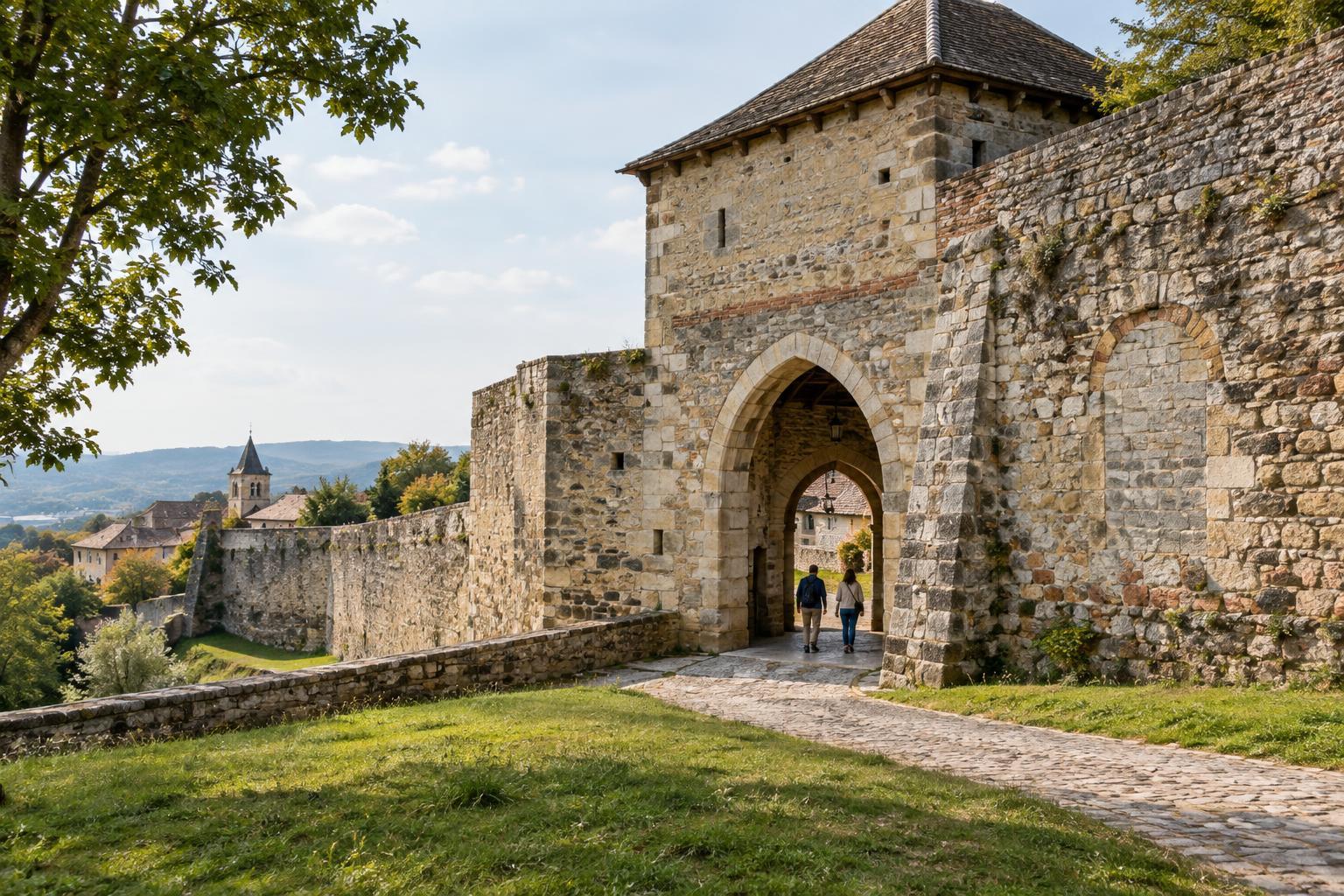
A fortification can look like a single monument from a distance. Up close, changes in stone, brick, mortar or surface finish may suggest several periods of building and repair. An older section might have been incorporated into a later enclosure; a gate might have been altered as the settlement grew. These differences do not automatically provide dates or explanations, but they give historians and conservators questions to investigate.
Materials can also connect a wall to its surroundings. Stone that resembles local geology may point to nearby sources, while reused blocks can show that earlier structures remained available and meaningful, or simply convenient. Tool marks and patterns of construction offer clues about craft practices. Careful interpretation distinguishes what can be observed directly from what remains a possibility.
Repairs are particularly revealing because they show that upkeep mattered. A wall required repeated decisions about labour and resources long after its first construction. A modest patch can be evidence of an ongoing relationship between a community and a structure it continued to use, maintain or regard as important.
Gates reveal the social life of an enclosure
Gates connected the space inside a fortification with the world beyond it. They could mark a route into a market, a ceremonial approach or a boundary where visitors encountered local rules and customs. Their position and appearance may reveal how a community presented itself, although later rebuilding can complicate that picture.
Decoration matters as much as masonry. An inscription, emblem or carefully finished entrance may have expressed civic identity or a patron’s status. Even without elaborate ornament, the contrast between a prominent gateway and a quieter stretch of wall can suggest that some places were meant to be seen and remembered. Such features invite questions about who was welcomed, who was regulated and who had the authority to define the boundary.
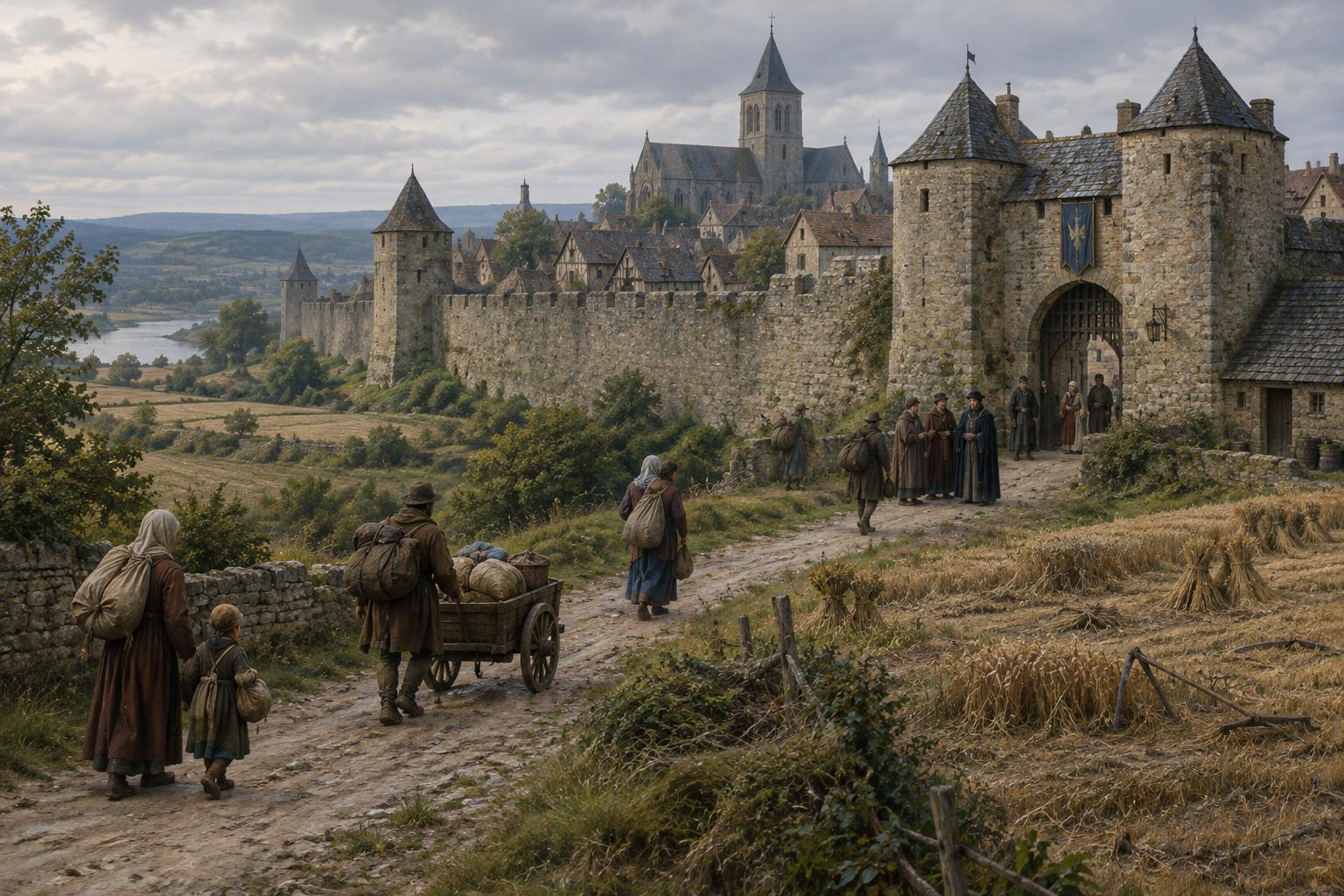
A gate was also an everyday place. People passed through it for work, trade, worship and family visits. Considering those ordinary movements keeps the fortification from becoming only a backdrop for exceptional events.
Changes in use reveal changing priorities
The meaning of a fortification could change while its walls remained standing. A settled community might build against an old wall, use part of it as a property boundary or open a new passage through it. Later generations might treat the same structure as a landmark, a source of building material or a heritage site. These uses form part of its history rather than distractions from an imagined original state.
Maps, images, excavation records and local accounts can help establish when changes occurred, but each kind of evidence has limits. A drawing may favour a striking view; an account may emphasize an important visitor rather than daily life. Comparing such records with the surviving fabric can produce a richer interpretation than relying on either alone.
The absence of a wall can be informative too. A missing section may reflect deliberate removal, gradual decay or modern alteration. Its former line may still be suggested by streets, property boundaries or changes in ground level, though these clues need careful assessment.
Reading and preserving a shared record
Fortifications bring military history into contact with the histories of labour, design, government and memory. The most useful question is often not simply what a wall was built to do, but how people made, maintained, passed through and reinterpreted it. That approach leaves room for multiple experiences, including those not celebrated in monuments or chronicles.
Conservation supports this broader reading when it protects evidence of different periods rather than making every surface appear uniform. Repairs, blocked openings and weathered materials may look untidy, but they can preserve traces of change. Clear interpretation can explain which conclusions are well supported and which remain uncertain. A historic wall then becomes more than a remnant: it becomes a record of a community continually reshaping its surroundings.