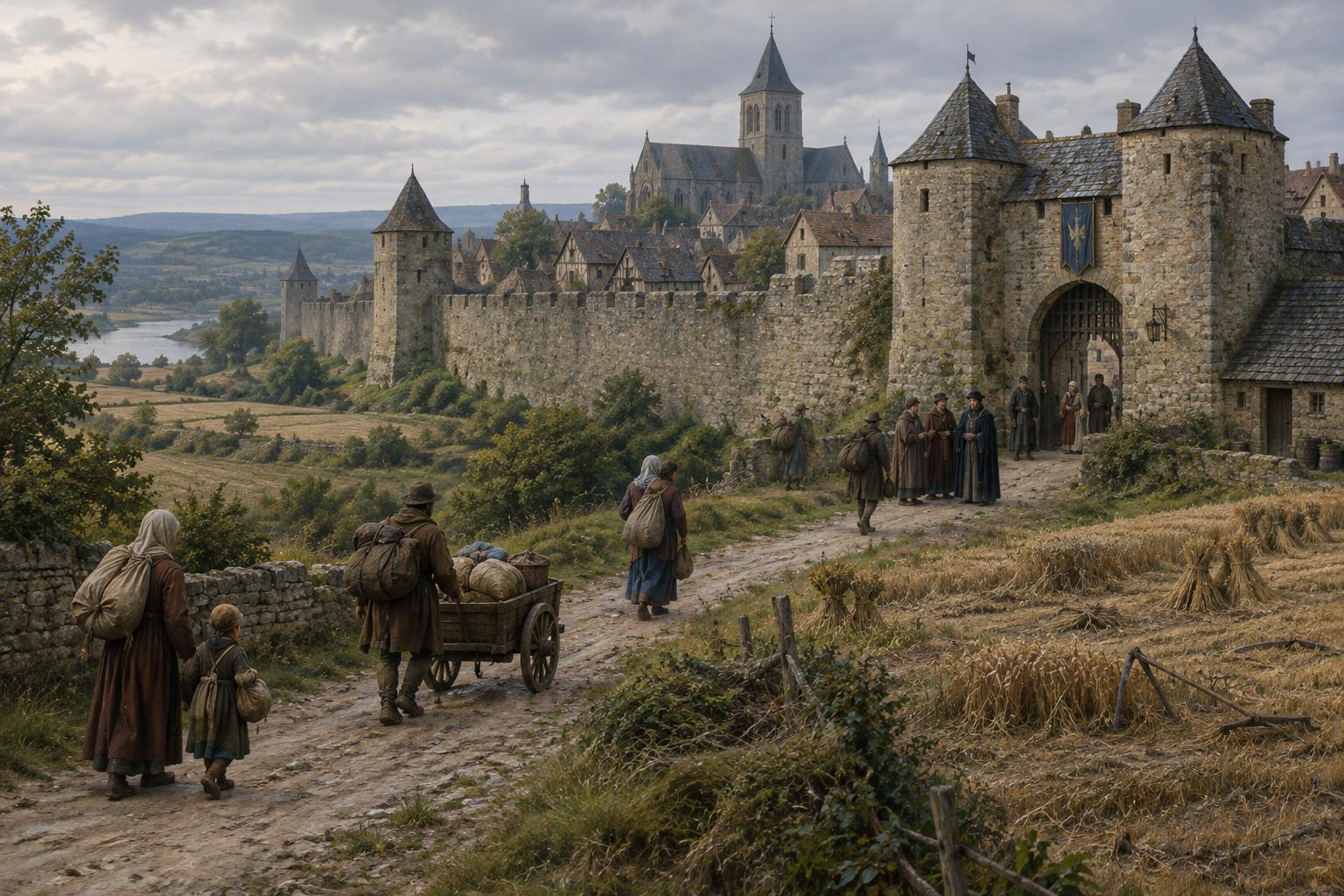
More than a sign of recognition
A military banner or standard is a piece of material culture with a public voice. Its colours, emblems and inscriptions may identify a ruler, state, regiment or other body, but they can also express an aspiration: loyalty, honour, continuity or a claim to authority. Unlike a written order, a banner communicates through design as well as words. It was made to be seen, and its appearance could matter to people well beyond the group that carried it.
The terms banner, flag, colour and standard have varied across places and periods. Rather than assuming that each names a fixed type of object, it is more useful to ask what a particular object was called in its own setting, who was entitled to use it and when it appeared. Those questions turn a striking image into evidence about social relationships.
Whose identity does a banner represent?
A banner may bring several identities together. A royal emblem can appear beside a local device; a unit designation may share space with a motto or a religious symbol. Such combinations can suggest that allegiance was layered rather than exclusive. Service to a sovereign, attachment to a community and pride in a particular unit need not have meant the same thing to everyone associated with the banner.
Design choices should also be read as claims, not as a complete account of belief. An emblem selected by a patron or prescribed by an institution tells us something about how authority wished to present itself. It does not prove that every person beneath the banner understood or endorsed it in the same way. Comparing the object with contemporary descriptions, records of its commission or depictions of its use can help distinguish an official identity from lived experience.
Craftsmanship and the language of display
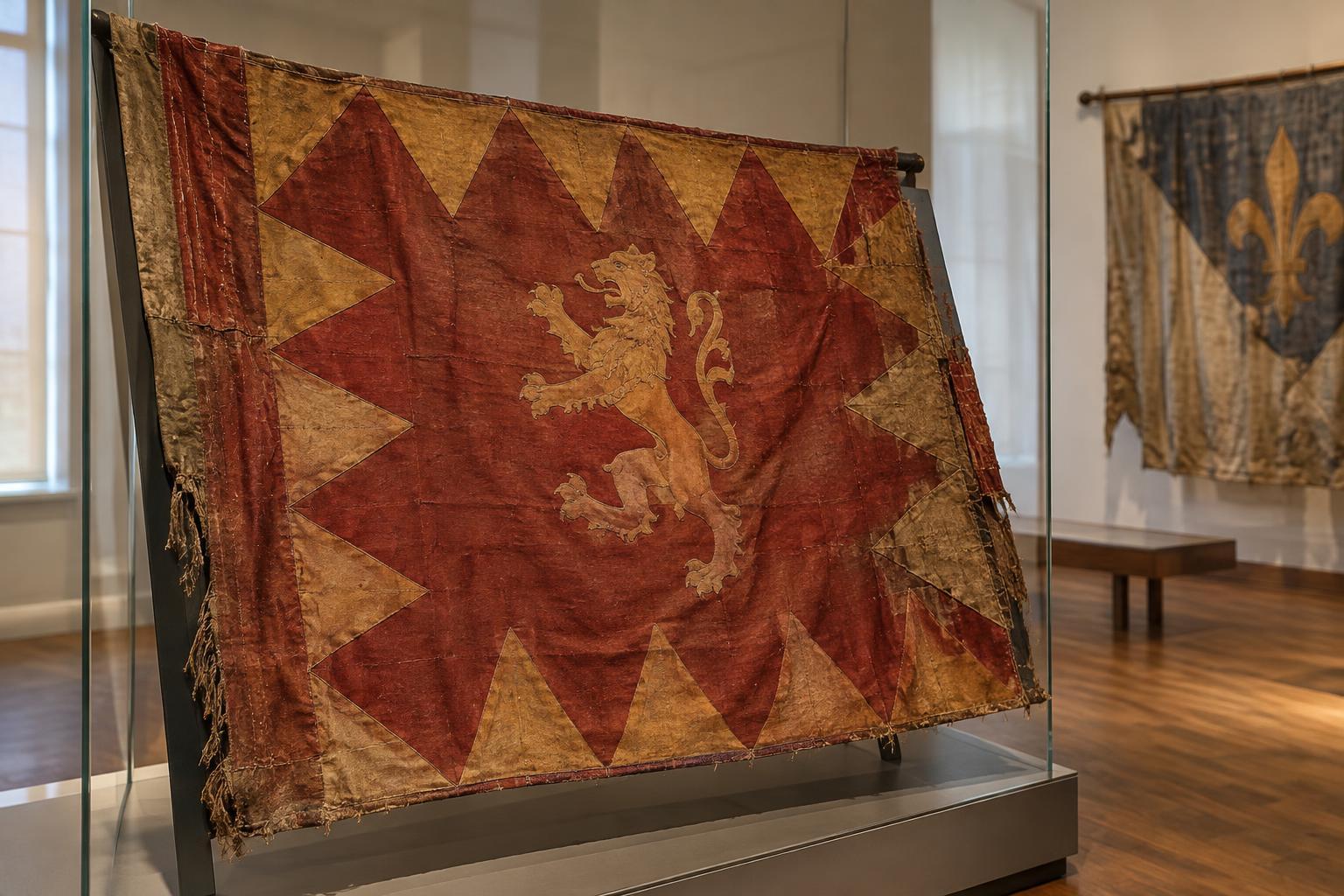
Materials and techniques add another layer of evidence. Woven cloth, embroidery, painted details and attached ornament require different skills and resources. Fine materials or elaborate work may point to ceremonial importance or substantial patronage, although appearance alone cannot establish the original cost. Scale, lettering and the placement of devices can likewise suggest whether a banner was intended chiefly for close viewing, public display or use in a formal procession.
Wear is meaningful, but it needs careful interpretation. Fading, repairs and replacement fabric might reflect prolonged use, later display or efforts to preserve a valued object. A patched edge is not automatically evidence of an event in the field. Looking at how the construction and decoration fit together can raise better questions: Was an inscription added later? Does a repair cover an earlier design? Has mounting for exhibition changed the way the cloth hangs?
Allegiance can change while objects endure
Banners often outlast the political relationships they were made to express. A change of ruler, a reorganized unit or a shift in local loyalties may leave an older design in an archive, place of worship or museum. Its survival can show that people continued to value the object, but not necessarily for its original purpose. It might come to represent remembrance or shared heritage rather than an active pledge.
This later history matters when interpreting symbols. An object labelled with a familiar name today may have passed through several owners, been displayed on different occasions or acquired an association that was absent when it was made. Provenance—the documented history of ownership and custody—helps explain how a banner moved from a public emblem to a collected artefact. Where that history is incomplete, an honest interpretation leaves room for uncertainty.
Reading a banner in the museum
A museum label may identify a banner’s date, maker or associated group, but visitors can also look for the questions behind those identifications. Which features connect the object to a named body? Are its symbols contemporary with the cloth? Does the display distinguish a documented use from a later tradition about it? Photographs of the reverse, close views of stitching and information about past repairs can make an otherwise distant object easier to understand.
Banners are especially vulnerable to damage from light, handling and the strain of their own weight. For that reason, a historic example may be shown briefly, supported in a particular way or represented by an image while the original remains in storage. Those choices are part of its continuing history. Read alongside its design and provenance, conservation can reveal how successive generations have decided that this fragile evidence of identity deserves to endure.