One object, several stories
Armour sits comfortably in more than one kind of museum. It belongs to the history of conflict, but it is also the product of skilled makers, costly materials and visual choices. A helmet may have been designed with protection in mind while also displaying an owner’s identity. A decorated breastplate can invite close attention to its surface without ceasing to be a historical object with a purpose.
A museum’s institutional focus shapes which of these stories visitors encounter first. In a military museum, armour may appear alongside accounts of armies, equipment and changing forms of service. In an art museum, the same object may be placed near metalwork, portraiture or other examples of design. Neither approach is inherently complete or incomplete. Each establishes a useful starting point—and raises different questions.
The military museum: armour in historical context
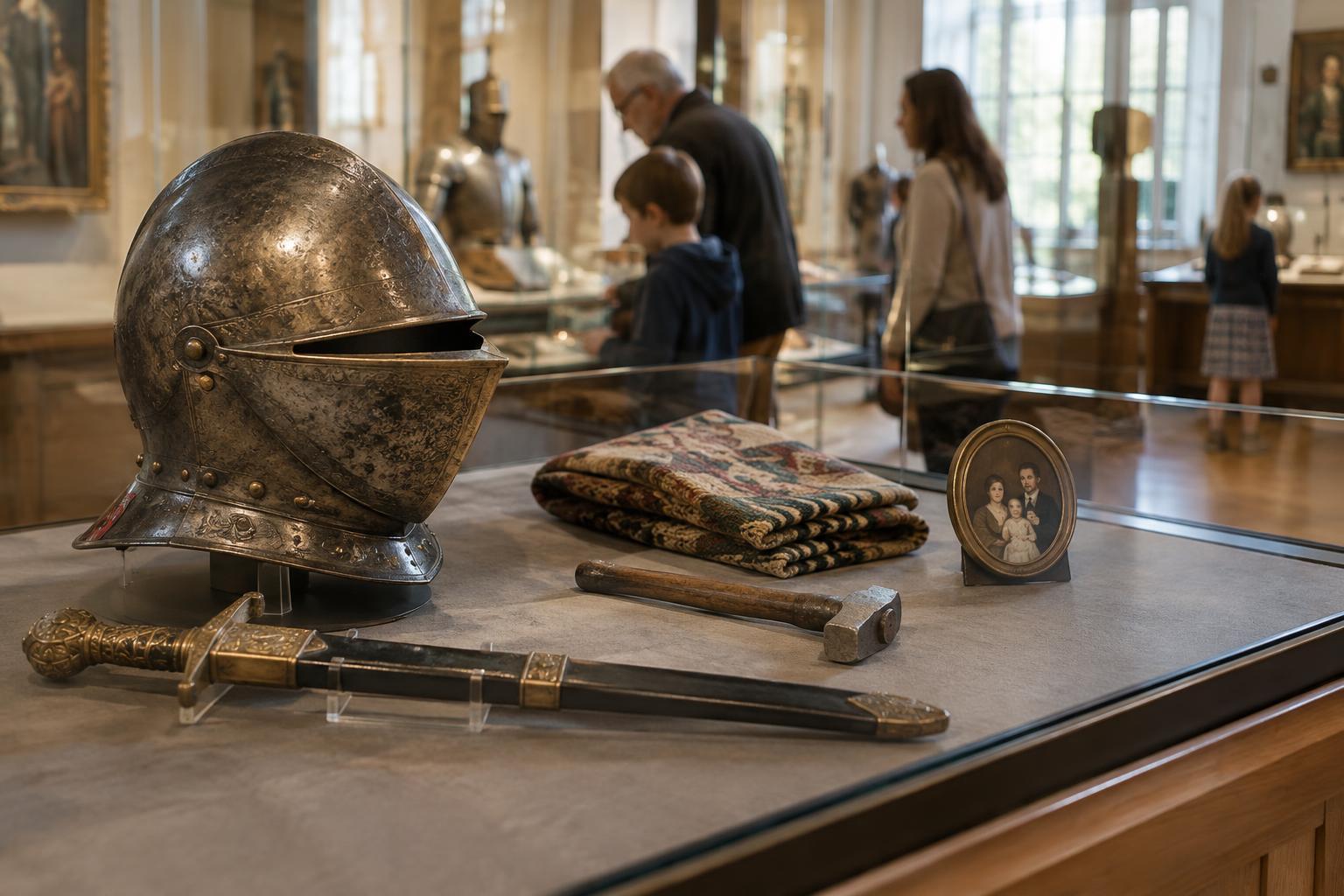
A military display often asks where armour fits within a wider account of conflict. Labels may identify a period, a type of wearer, or the relationship between protective equipment and other objects in a collection. Grouping armour with portraits, documents and surviving equipment can help visitors imagine it as something worn by a person rather than as an isolated sculpture.
This approach can also make changes over time easier to follow. A sequence of objects may show that armour varied with resources, social position and the expectations placed on its wearer. Yet a broad military narrative can leave little room for the individuality of a particular piece. If a case treats armour chiefly as an example of a type, visitors might miss its workmanship, later alterations or the uncertainty surrounding its original use.
The art museum: looking closely at making and meaning
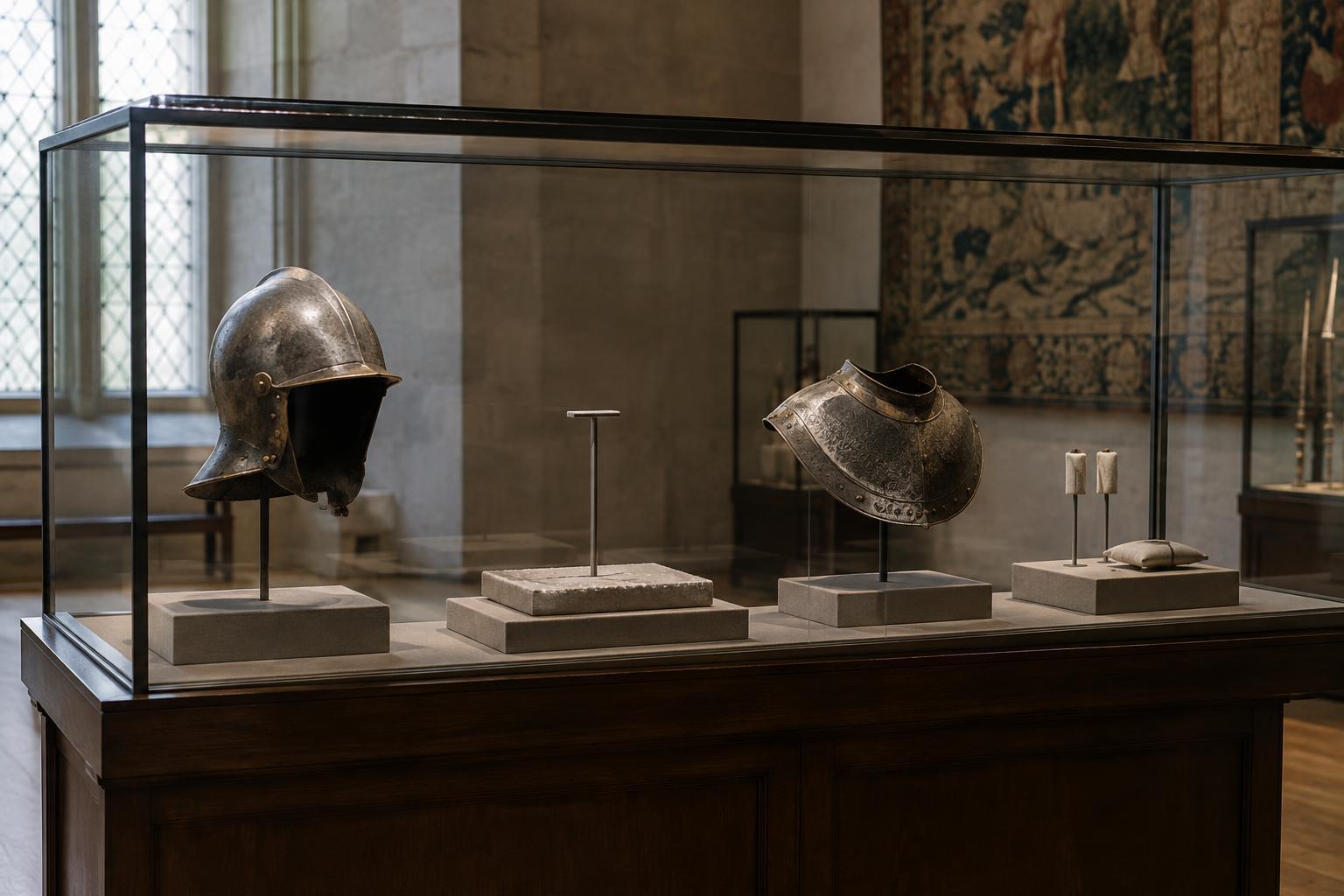
An art museum may give more space to form, decoration and craft. Lighting can draw attention to shaped metal, engraved details or the relationship between rigid plates and flexible components. A label might discuss the choices of makers and patrons, or ask how a polished surface and ornament conveyed prestige. Displayed this way, armour challenges a simple division between functional object and artwork.
The risk is that a visually striking object can seem detached from the circumstances in which it was made and worn. A fine finish does not tell the whole story of a wearer’s experience, and elaborate decoration should not automatically be read as evidence of ceremonial use. Some objects have complicated histories, including repairs, replacements and later assembly. Close looking is most rewarding when it is paired with clear information about what the museum knows—and what remains uncertain.
Display choices are arguments
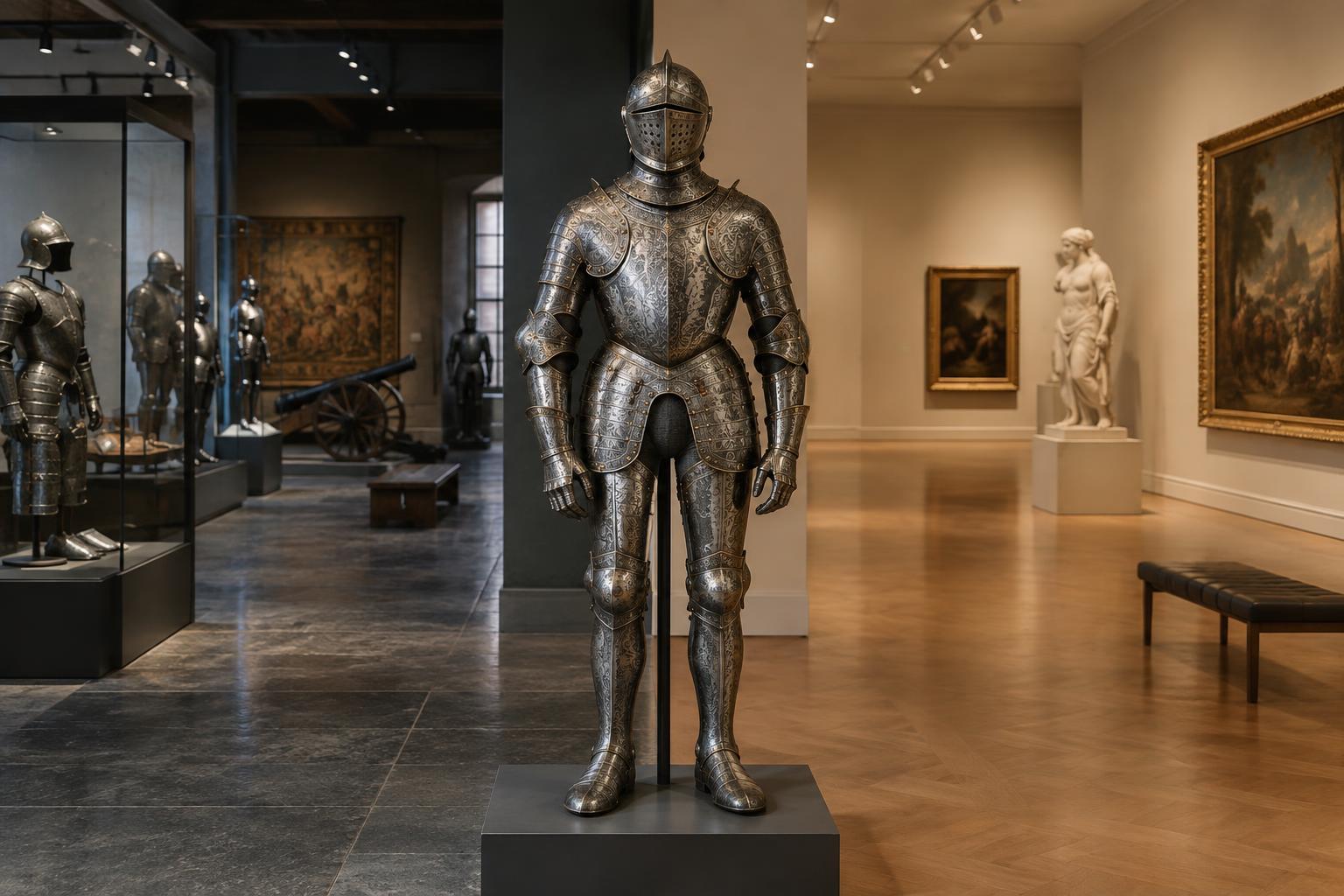
The physical arrangement of an exhibition affects interpretation before a visitor reads a label. Armour mounted on a human-shaped form suggests a body and a wearer; a single helmet in a case encourages attention to its construction and surface. An ensemble may look coherent even when its components have different histories. Museums can help by explaining whether pieces have a documented association, have been brought together for display, or cannot be confidently connected.
Labels also set the terms of a visitor’s encounter. A name, date or place can seem definitive, although attribution is sometimes tentative. Words such as “attributed to” or “possibly” are not weaknesses: they show where interpretation rests on incomplete evidence. Useful labels distinguish what can be observed on the object from what is inferred through comparison or records. That distinction lets visitors appreciate both the object and the work of interpreting it.
What to look for as a visitor
When viewing armour, begin by noticing the museum’s questions. Is the display primarily explaining a historical setting, a maker’s skill, a wearer’s status or the object’s later life? Then look for what supports that emphasis: accompanying objects, images, label language and the way the armour is mounted. Ask what another kind of museum might place beside it, or what information a different label might bring forward.
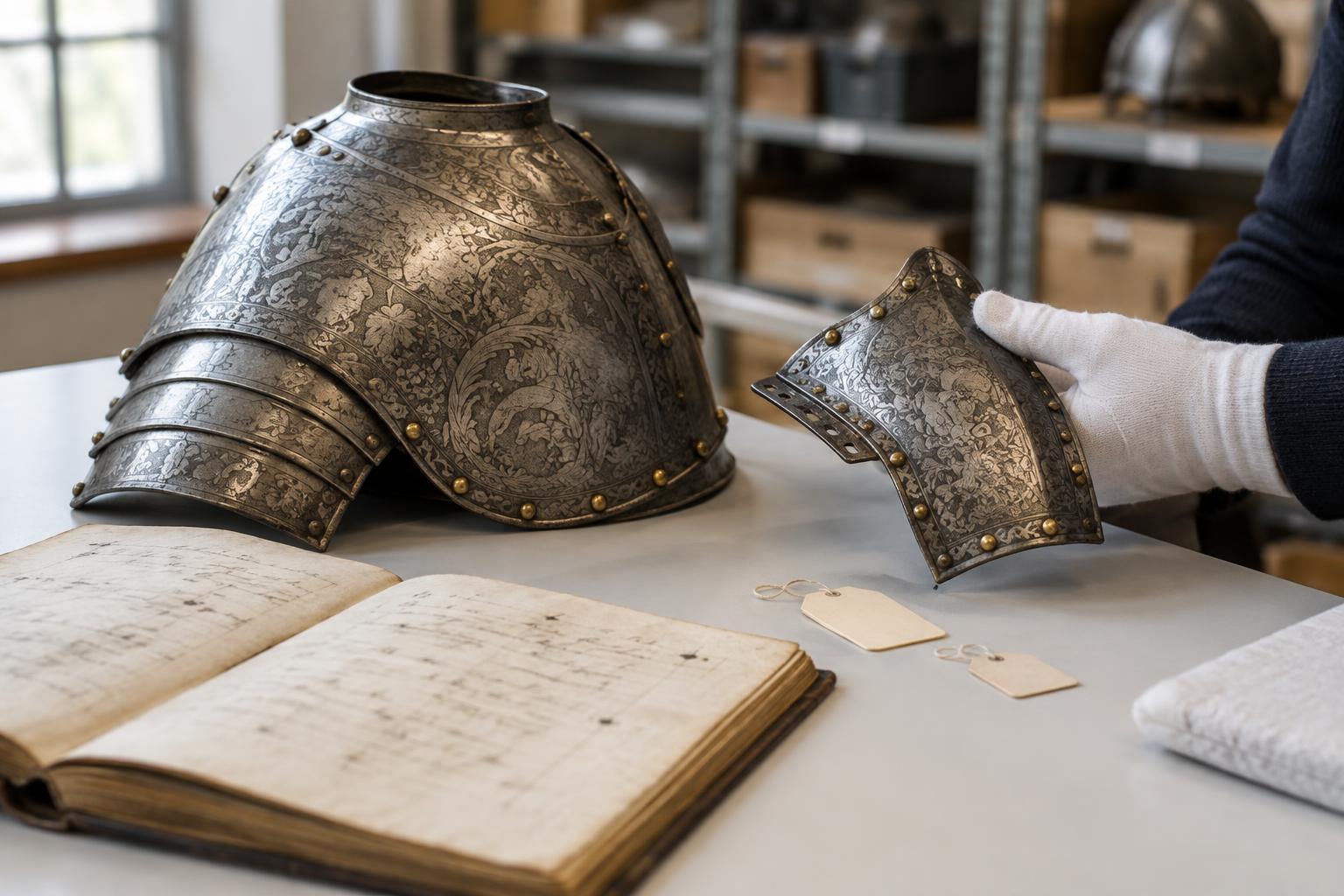
Finally, remember that museum objects have histories after their original use. Storage, repair, restoration and conservation all influence what survives and how it looks today. A carefully maintained surface may be easier to study, but no display can recover every lost context. Military and art museums offer different routes into the same material evidence. Reading across those routes makes armour more than a symbol of battle or a feat of craftsmanship: it becomes a record of people’s choices, and of the questions later generations have asked about them.