Why the distinction matters
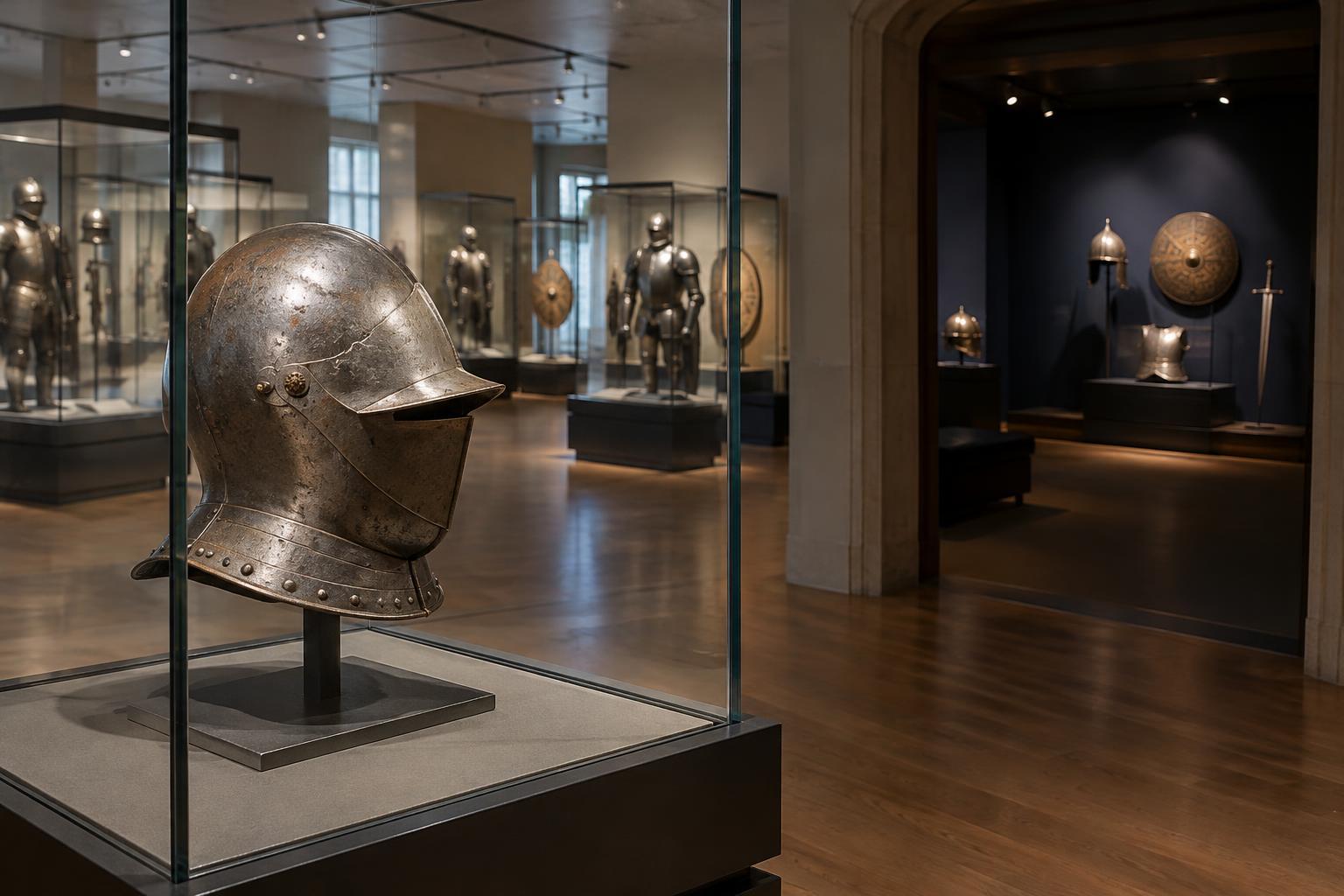
A suit of armour in a gallery can look complete and ready for display, but its appearance may have a complicated history. Some pieces survive from the period named on the label. Others may have been replaced after damage or brought together from separate collections. A nearby replica might have been made much more recently. The difference does not determine whether an object is worth seeing; it determines what kinds of questions it can answer.
An original can preserve traces of materials, workmanship, wear, and later alteration. A replica can help visitors grasp a form that is too fragile, incomplete, or inaccessible to show clearly. A reconstruction proposes how something may once have looked when evidence is missing. Good interpretation makes these different roles visible rather than asking visitors to treat every polished display as an untouched survival.
What does “original” mean?
In a museum, “original” usually identifies an object, or part of one, made in the historical period under discussion. It does not necessarily mean unchanged. Armour might have been repaired during its working life, altered for a later owner, or modified long after it entered a collection. Cleaning, stabilization, and older restoration campaigns can also affect what visitors see. An original helmet may therefore carry evidence from several periods at once.
Completeness presents another question. Separate historical components are sometimes displayed together to suggest how a full outfit would have appeared. Each component may be old, yet the combination may not be one that existed in the past. Look for label terms such as “assembled,” “composite,” or “associated.” They are useful clues to the relationship between the surviving pieces, not warnings that the display is inauthentic.
Replicas, casts, and reconstructions
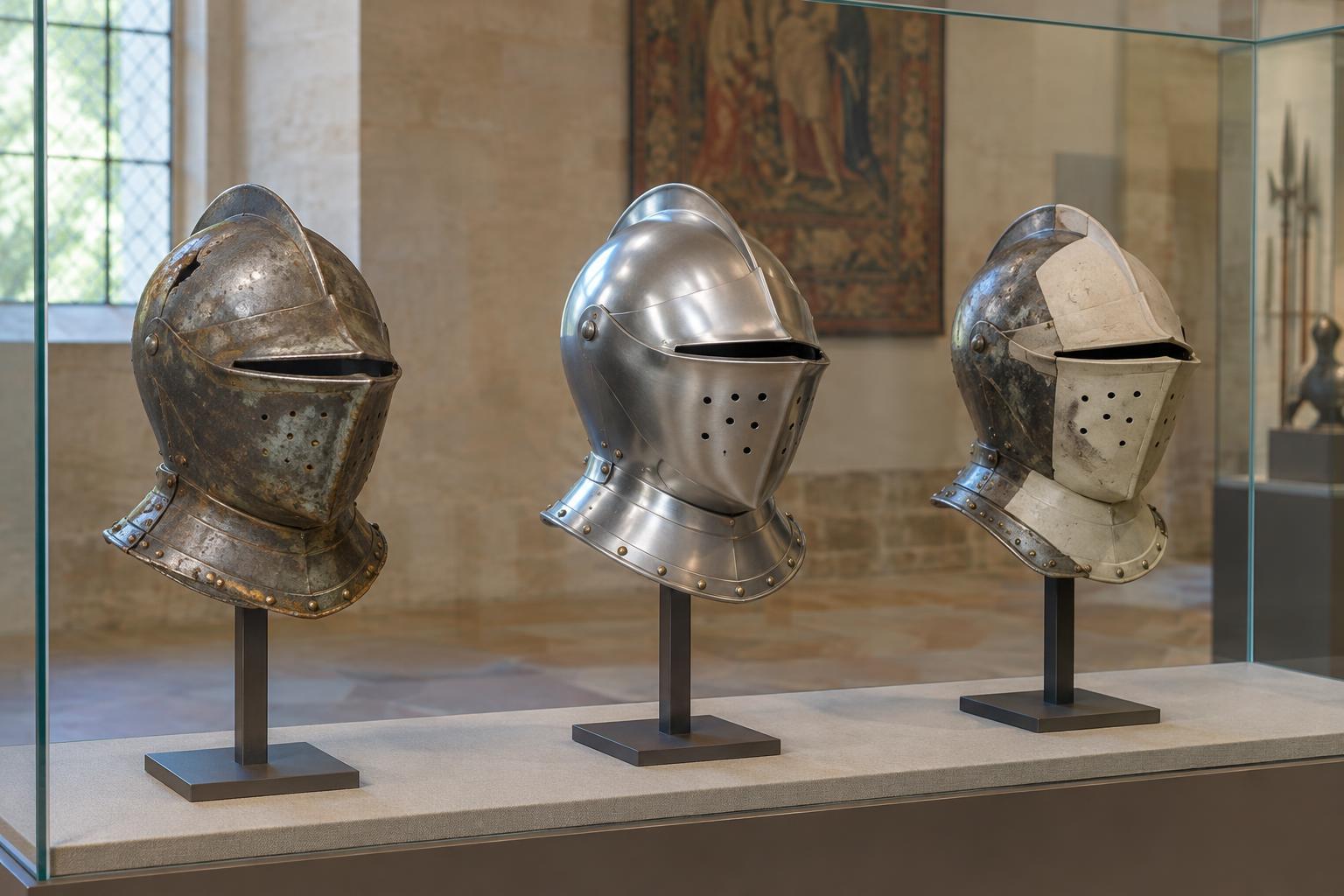
A replica is a later-made version of a particular object or type. It may reproduce a museum piece closely, or it may represent a more general historical pattern. Casts and other copies can preserve the visible form of an object while differing substantially in material or surface. Museums may use them when an original cannot travel, when a detail needs to be shown at eye level, or when visitors benefit from seeing an otherwise incomplete form.
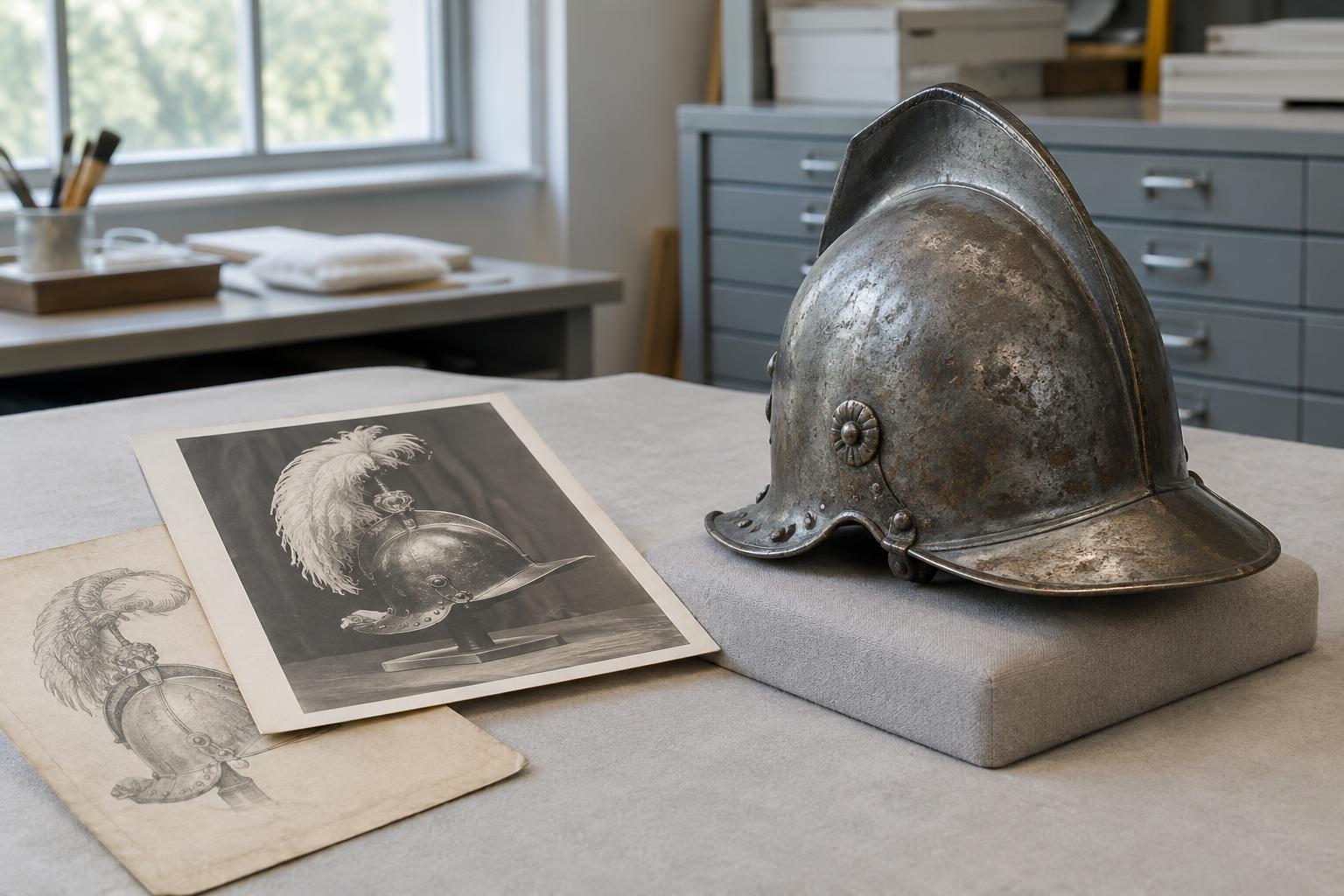
A reconstruction goes a step further by filling gaps. It may combine surviving evidence with informed interpretation to show a missing crest, a lost colour scheme, or the possible appearance of an entire ensemble. The stronger the evidence, the more specific the proposal can be; where evidence is limited, other interpretations may be plausible. A careful label distinguishes observed details from those supplied by the maker.
How display changes what we see
Gallery presentation can make distinctions harder to spot. Matching lighting, mounts, and backgrounds give different kinds of objects a visual unity. A modern support hidden beneath a textile or inside a piece of armour may make a fragment seem more complete. Conversely, a replica placed beside an original can expose a feature that would otherwise be difficult to understand. Display is an interpretation, not a neutral window onto the past.
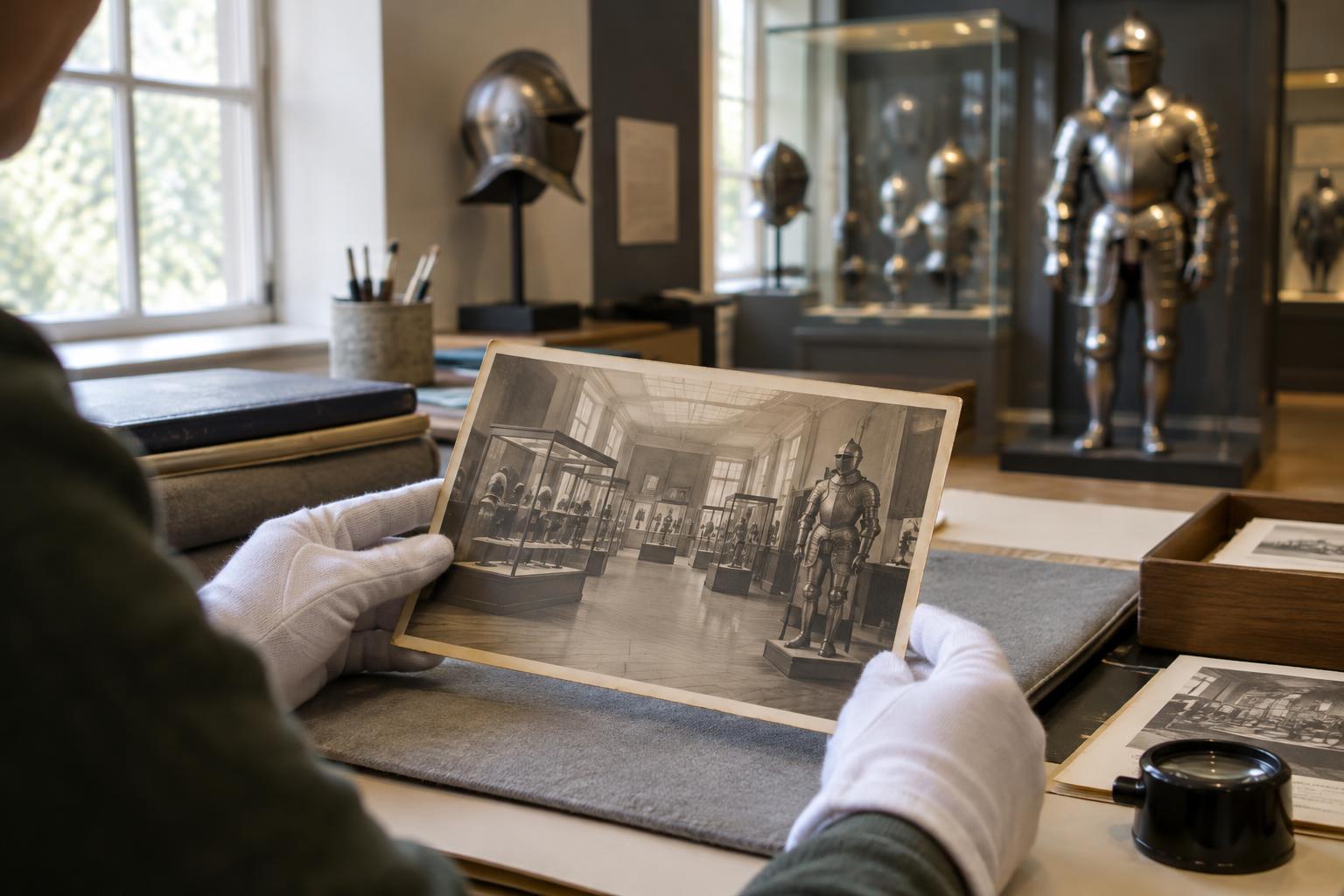
Start with the full label, including the material, date, and any wording about missing or replaced parts. Then compare the object with nearby photographs, drawings, or diagrams if the gallery provides them. Ask which parts are historical evidence and which help present that evidence. If a label simply says “reproduction,” it may not explain how closely the piece follows a known original; that is a reasonable question to take to a curator or gallery guide.
Reading the object without dismissing it
It is tempting to rank an untouched original above everything else. Yet a damaged original, a carefully identified replacement, and an openly labelled reconstruction can each serve a distinct purpose. The original preserves physical testimony. The replacement may make a historic form legible without asking a fragile survivor to bear the strain of display. The reconstruction can invite discussion about how historians and makers reason from incomplete evidence.
On a visit, try a simple three-part question: What survives from the past? What has been added or changed? What remains uncertain? These questions apply just as well to a decorated shield as to a complete-looking suit of armour. They shift attention from whether a gallery object is merely “real” to how its materials, history, and presentation work together to tell a story.