The same object, a different starting point
A historic helmet does not have a single story waiting to be read from its surface. Its shape and materials may speak to a craft tradition, while decoration may suggest status, belief or ceremony. Records of ownership, if they survive, can connect it to particular people. A museum has to choose which of these threads to introduce first. That choice is shaped partly by whether the helmet appears in a permanent gallery or a temporary exhibition.
A permanent gallery usually serves visitors over many years. It must provide an accessible route through a collection for someone seeing the subject for the first time, while offering enough detail to reward a closer look. A temporary exhibition generally has a more defined question and a limited run. Neither format is inherently more truthful or complete. Each creates a useful frame, and each leaves some possibilities outside it.
Permanent galleries build a broad map
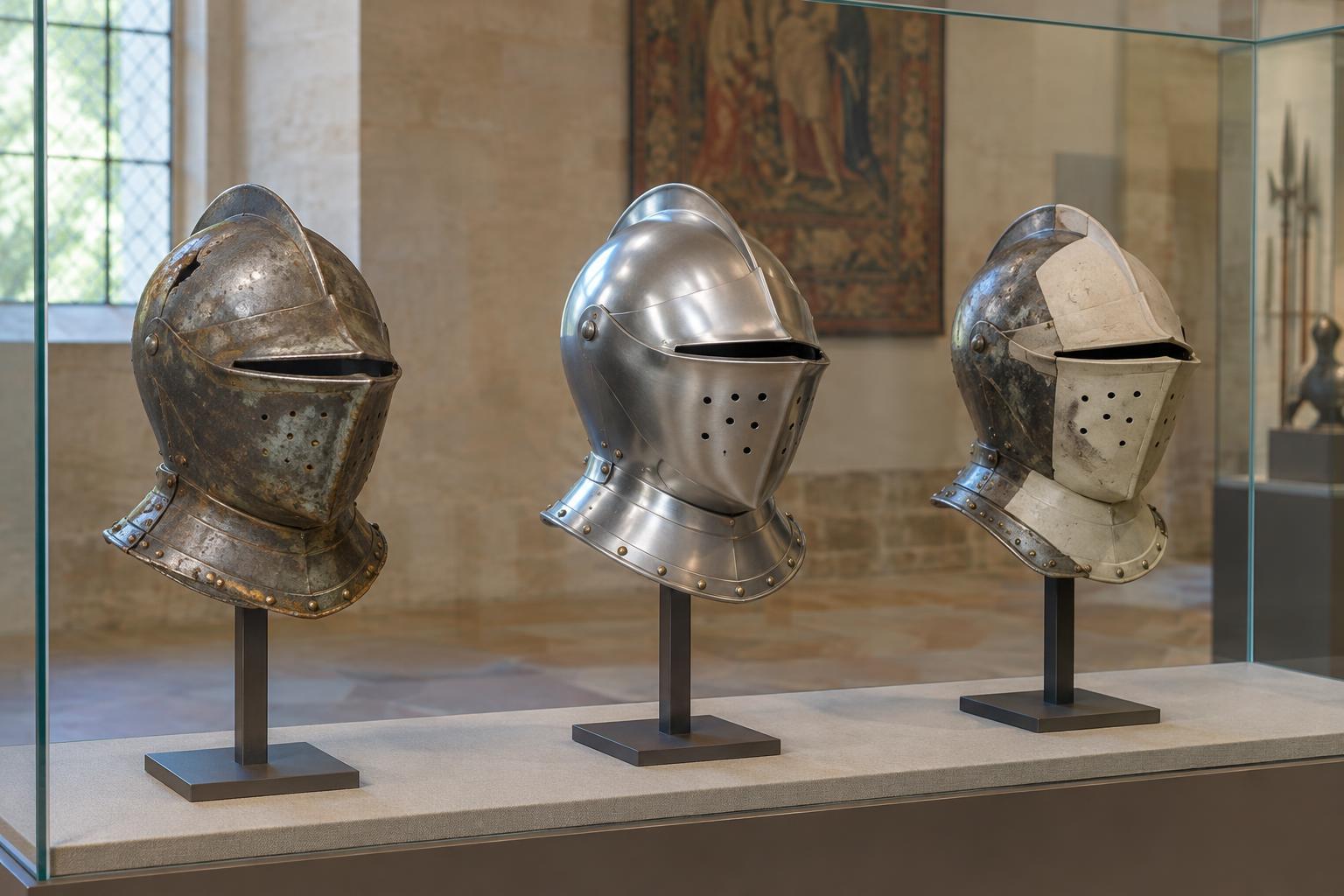
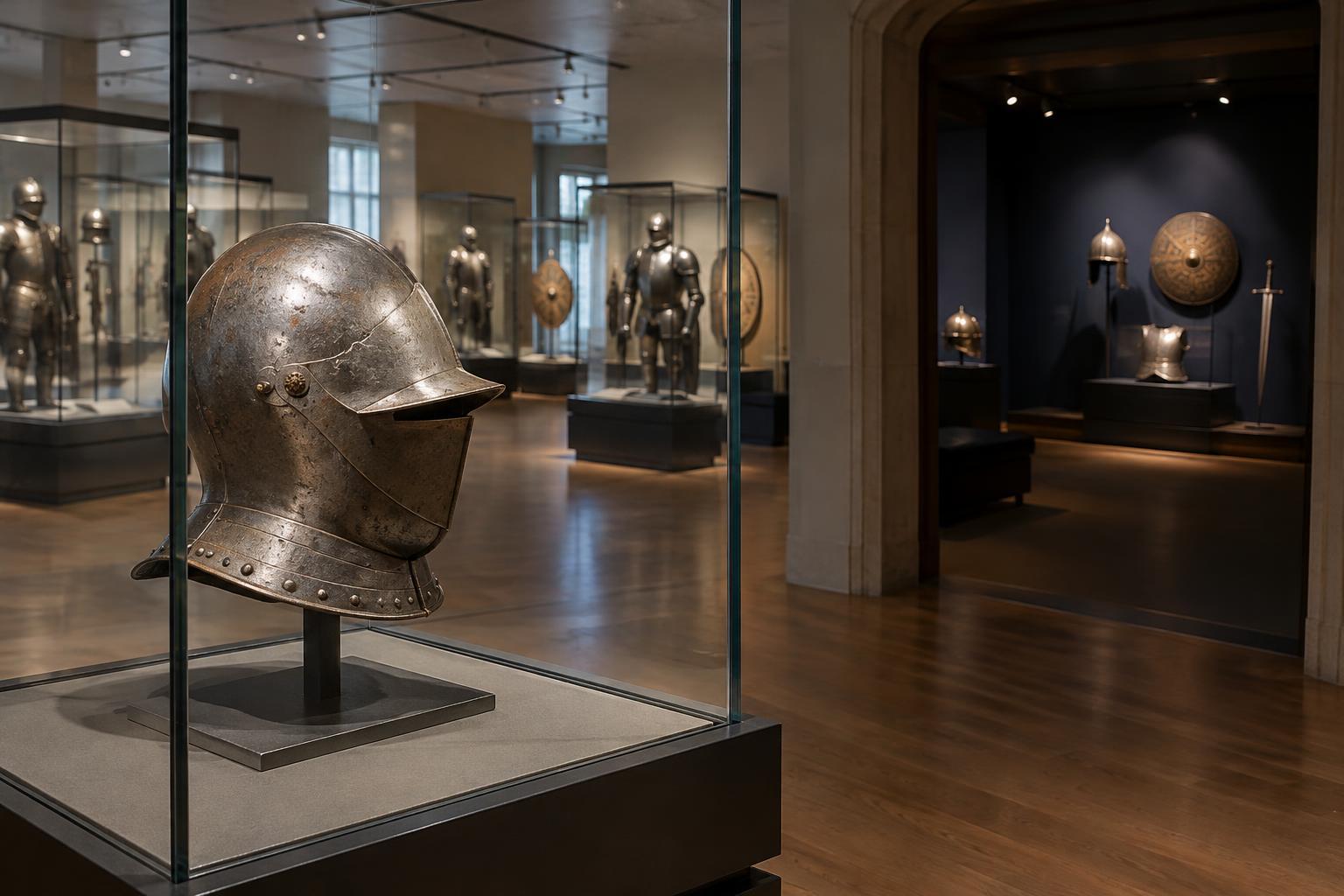
In a permanent gallery, arms and armour may be arranged by region, period, type or theme. A sequence of cases might help visitors notice changes in materials and craftsmanship, or compare objects made for different social settings. Because the display draws on a museum’s wider holdings, it can show relationships among objects that would be harder to see in isolation.
This breadth brings a challenge. A sword displayed beside several others can help explain a family of forms, but an individual maker, owner or later alteration may receive only a few lines on a label. Visitors may also assume that an orderly row of objects reflects an equally orderly historical progression. In practice, surviving collections are uneven. What remains available to display depends on patterns of use, preservation and collecting, not just on what mattered in the past.
Good gallery interpretation can make those limits visible. Labels can distinguish a documented history from an attribution, explain why a date is approximate and acknowledge when an object’s original setting is unknown. Such details do not weaken the display. They show how knowledge of museum objects is assembled.
Temporary exhibitions sharpen the question
A temporary exhibition can gather objects around a focused idea: the symbolism of animal imagery, the work of armourers, or the changing meanings of a ceremonial weapon. An object familiar from a permanent gallery may become evidence in a different conversation when placed beside paintings, textiles, documents or works borrowed from other collections. The point is not simply to add more objects, but to make a particular relationship easier to examine.
The focused format gives curators room to test a line of inquiry and explain it in stages. A visitor might first encounter an object as an example of skilled metalwork, then see how its design communicated rank, and finally learn how later collectors described it. That sequence encourages questions about meaning across time rather than treating the object as a fixed illustration of one era.
A strong theme can also narrow the view. Objects may appear to fit an exhibition’s argument more neatly than their complicated histories allow. Careful interpretation makes space for exceptions, uncertain evidence and alternative readings. Even a short label can signal that a symbolic motif may have held more than one meaning, depending on who used or viewed it.
Display choices shape what visitors notice
Cases, lighting, labels and placement all influence an object’s story. Showing armour at a height that suggests how it was worn may draw attention to the human body; placing it near tools or unfinished pieces may foreground the maker. Displaying both sides of a decorated object can reveal differences that a single frontal view would hide. These are interpretive decisions as well as practical ones.
Museums must also account for an object’s condition and conservation needs. A fragile surface may require restrained lighting, supportive mounts or limited time on display. A temporary exhibition cannot automatically show an object more closely or for longer than a permanent gallery can. When a display explains such constraints, visitors gain a better sense of the object as surviving material evidence, not merely an image in a historical narrative.
Read the frame as well as the label
Visitors can get more from either format by asking two questions: why is this object here, and what has been placed beside it? In a permanent gallery, look for the broad comparisons that make a case or room coherent. In a temporary exhibition, identify the central question and consider where the object supports it, complicates it or seems to sit apart.
It is also worth noticing what the museum says it does not know. An uncertain provenance, a disputed identification or a later repair can change how an object is understood. Permanent galleries offer the long view; temporary exhibitions invite a closer look at selected threads. Together, they demonstrate that an object’s story is not contained in a single label. It develops through evidence, comparison and the questions people bring to it.