A photograph records an interpretation, not just a room
A historic exhibition photograph can look like a straightforward record: a row of cases, objects mounted on a wall, perhaps a visitor standing nearby. Yet every visible arrangement reflects decisions about what belonged together and what a viewer was meant to notice. For museums of arms and armour, a photograph may show whether objects were presented primarily as examples of technical skill, as symbols of rank, as works of art or as evidence of wider histories.
Those approaches need not have been mutually exclusive. A suit of armour placed at the centre of a gallery might attract attention through its craftsmanship while also suggesting ideas about status and ceremony. The photograph records the display, but it does not necessarily tell us which meanings a curator intended or which meanings visitors took away.
Cases, groupings and sightlines offer clues
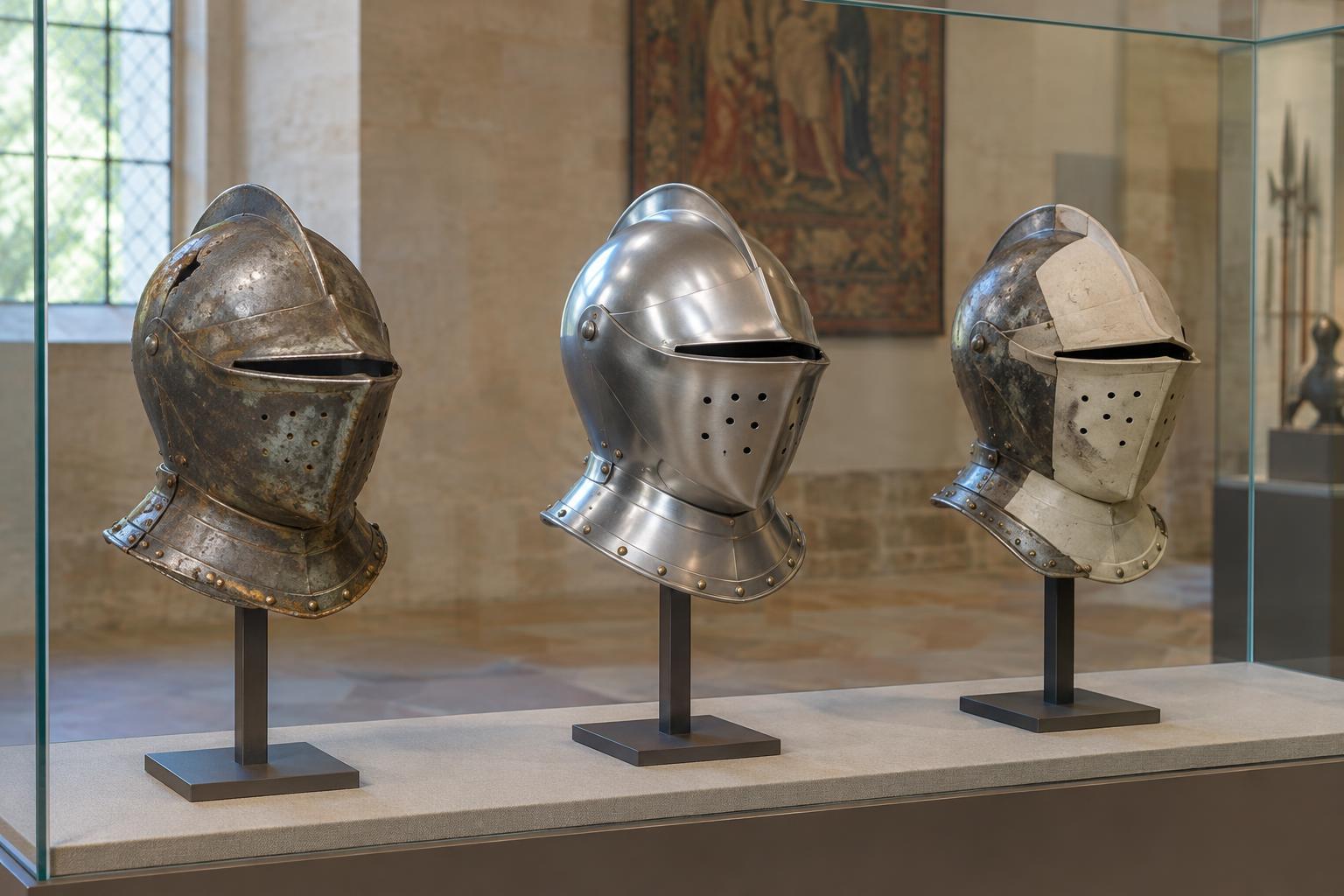
Look first at relationships between objects. Are helmets, textiles and portraits displayed together, or are similar forms lined up in a sequence? A mixed grouping may encourage visitors to think about use, identity and setting. A sequence of similar objects may invite comparison of materials, shapes or decorative techniques. Neither arrangement has a single fixed meaning, but each gives viewers a different starting point.
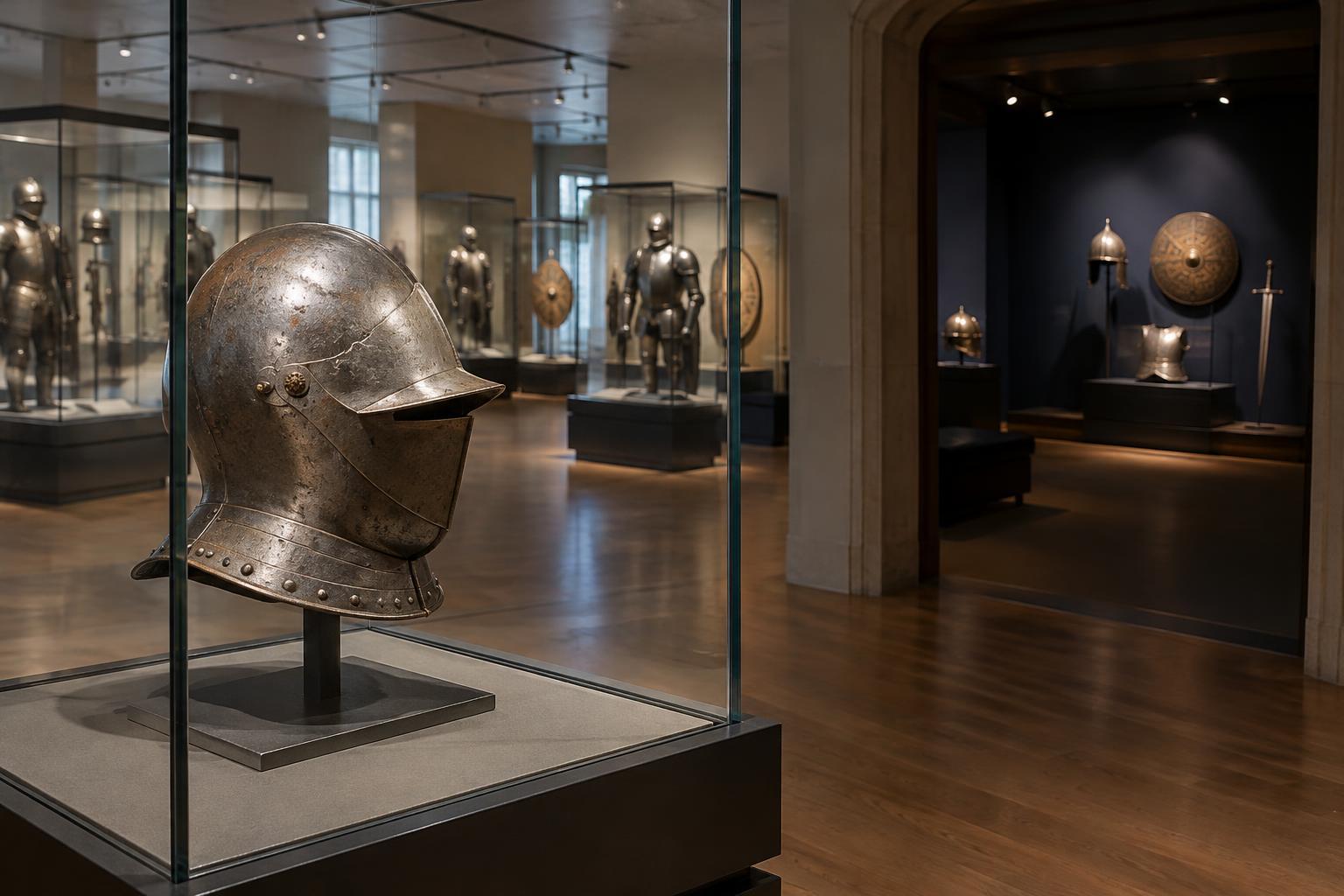
Scale and placement matter too. An object isolated against an uncluttered background can appear exceptional; one among many may become part of a broader pattern. Sightlines reveal what a visitor approaching the room might have seen first. Even case design can shape interpretation: a dense cabinet asks for close looking, while a spacious display may give an object room to stand as an individual work. Photographs help us examine these choices, though camera position can exaggerate or conceal them.
Labels and language show what counted as knowledge
When labels are legible, they are especially valuable. Their wording can reveal whether a display emphasized an object's maker, material, owner, place of origin or cultural significance. Brief labels may leave visitors to rely on visual impressions; fuller text can connect an object to the people who made, used or preserved it. The terms chosen for places and communities also deserve attention, because museum language can change as institutions reconsider older classifications.
Many photographs, however, make labels impossible to read. In that case, resist treating a visible arrangement as proof of a particular argument. A photograph may be paired with a gallery guide, catalogue, floor plan or object record, if one survives. Comparing these records can help distinguish what appeared in the room from what the museum said about it. Differences between them are informative rather than necessarily contradictory: visitors could encounter a display in ways that written descriptions did not anticipate.
Notice what is missing from the frame
A photograph is a selective view. It may have been made to document a case, illustrate a publication or promote an exhibition. The camera can leave out entrances, neighboring displays, visitor routes and the lighting conditions that shaped the experience of seeing the objects in person. A seemingly quiet gallery may simply have been photographed before visitors arrived.
Absences within the display also call for care. If a photograph shows ornate armour but little information about its makers, that may suggest an emphasis on appearance or ownership, but it cannot establish what was discussed elsewhere in the exhibition. Likewise, an empty-looking space does not prove that a collection held no related material. Asking what the frame excludes is often more useful than drawing a firm conclusion from silence.
Use old views to ask better questions today
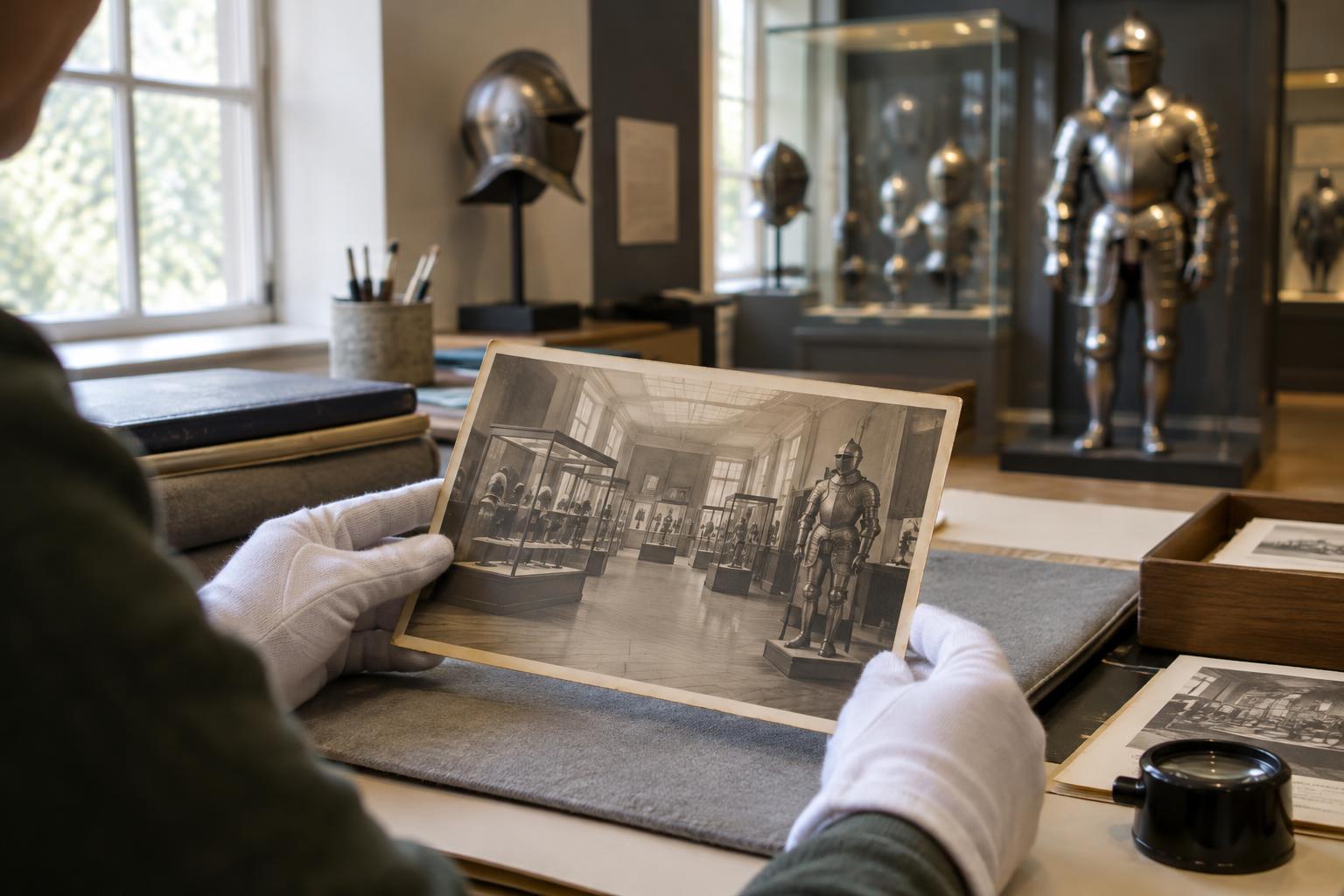
Photographs become particularly revealing when compared across successive displays of the same object. Has it moved from a chronological row into a setting with paintings or documents? Is it now shown with information about craftsmanship, collecting history or ceremonial meaning? Such changes can suggest shifting interpretive priorities. They may also reflect practical matters, including available space, lighting, conservation needs or newly identified information.
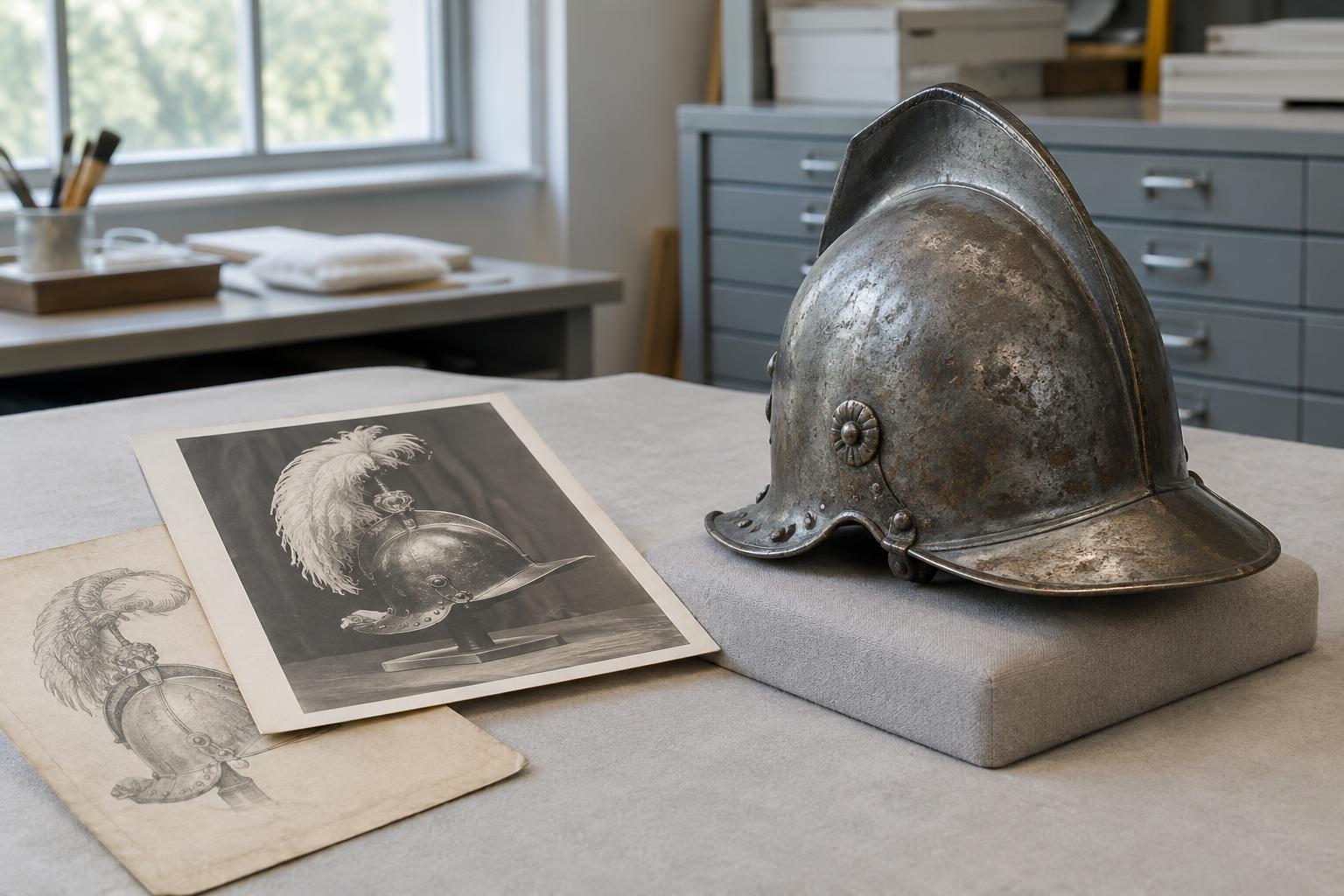
Historic views can also prompt questions about the physical care of collections. Older mounting methods and exposure to light may look different from those used in a later display, but a photograph alone cannot establish an object's condition or explain a conservation decision. The strongest reading brings images together with records and acknowledges uncertainty. Treated this way, exhibition photographs are not merely nostalgic glimpses of former galleries. They are evidence of how museums have framed objects for audiences, and invitations to examine how those frames continue to change.