Two approaches with different aims
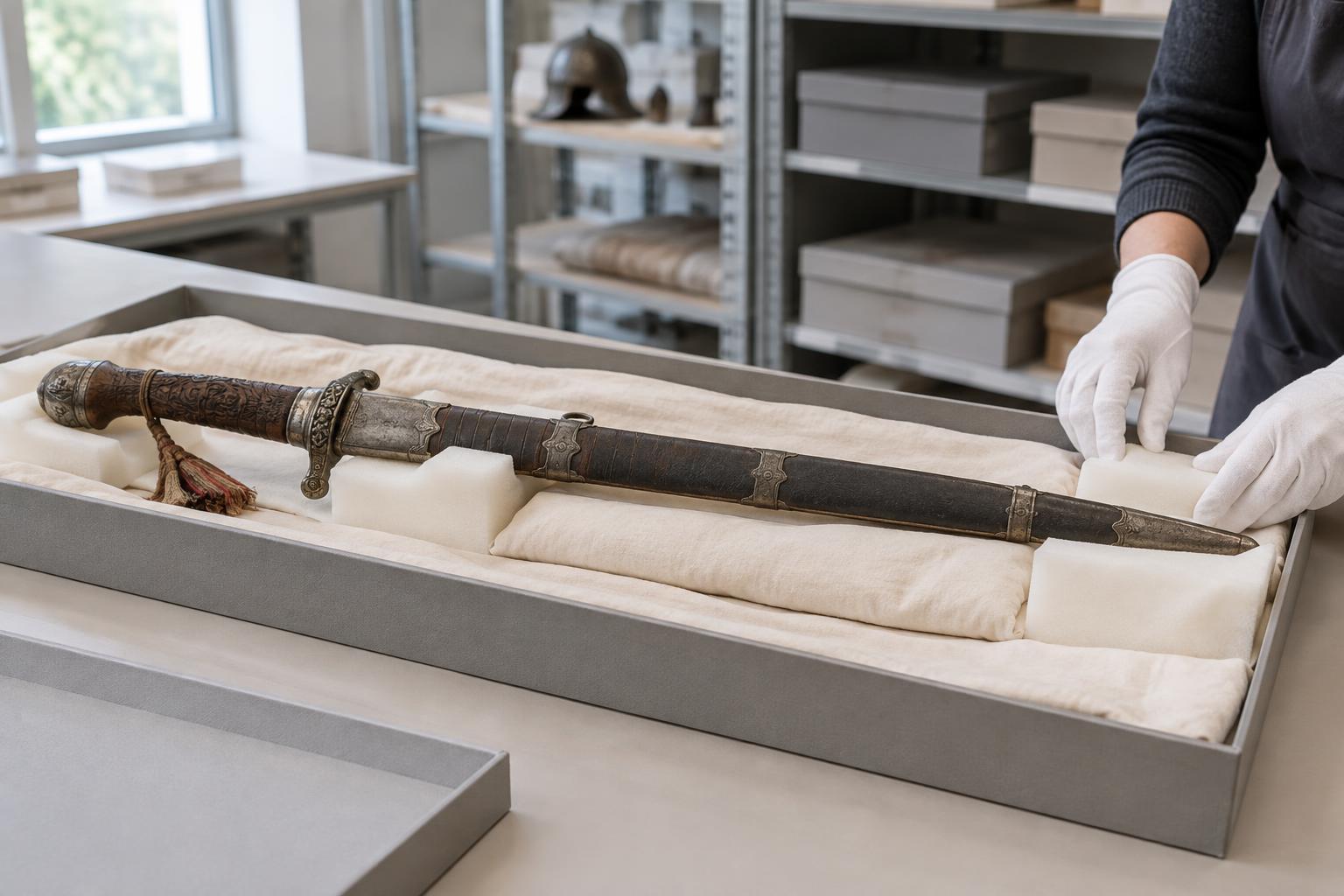
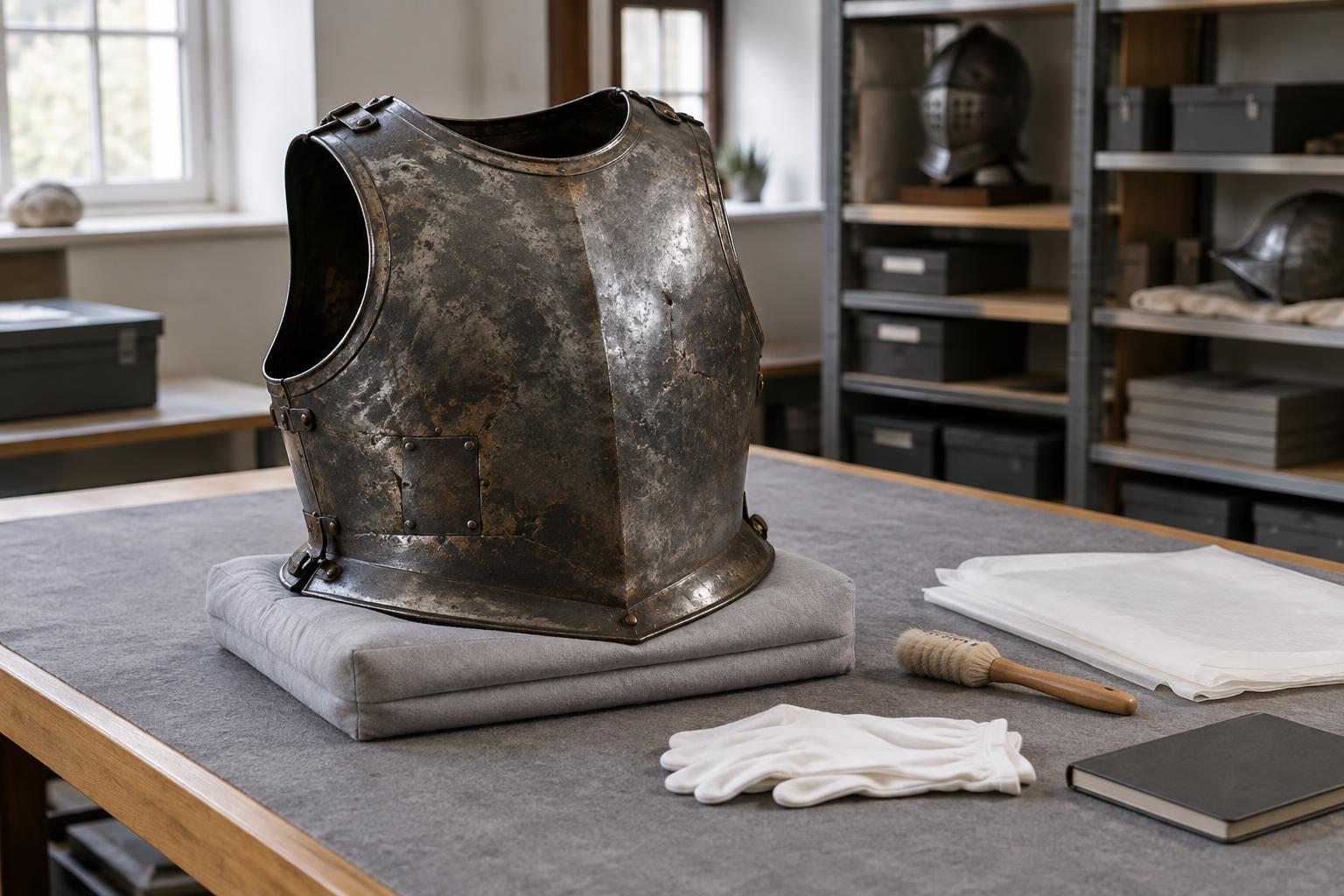
Preventive conservation aims to reduce the chance of future damage. It focuses on the conditions around an object: handling, storage, display, light, moisture and routine observation. Rather than changing a helmet, sword or shield, it seeks to keep its existing materials as stable as possible. For a collector, this is usually the first and most useful form of care.
Restoration involves an intervention intended to recover an earlier appearance or make losses less conspicuous. That might mean replacing a missing element or altering a damaged surface. Conservation treatment can also involve direct work on an object, but its aim is generally to stabilize it while retaining as much surviving evidence as possible. The terms are sometimes used differently in different settings, so it is worth asking exactly what work is proposed rather than relying on a label.
Why signs of age matter
Historic arms and armour are not simply examples of how an object looked when new. They may preserve marks of manufacture, adjustment, ownership, repair and later display. A replaced strap, an old inventory number or an uneven finish can help tell part of that story. Even a feature that appears unattractive may be informative once the object has been examined in context.
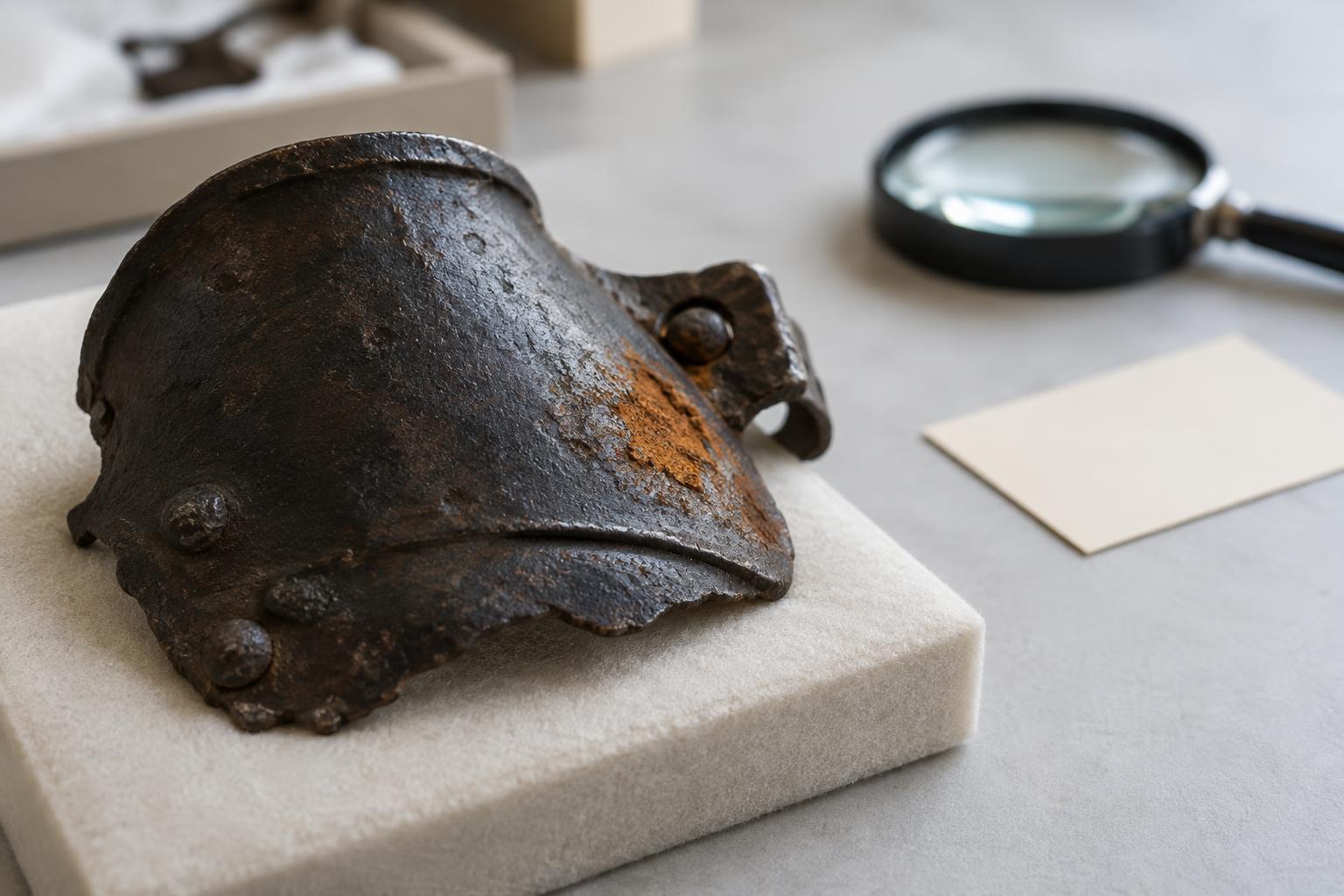
This does not mean every mark should be left untouched. Active deterioration may call for attention, and some earlier repairs may put an object at risk. But an attempt to make a piece look complete can remove evidence that cannot be put back. Polishing a metal surface, for example, may take away historic finishes or tool marks along with recent dirt. When the history of a feature is uncertain, restraint preserves options for future study.
Start with the collection environment
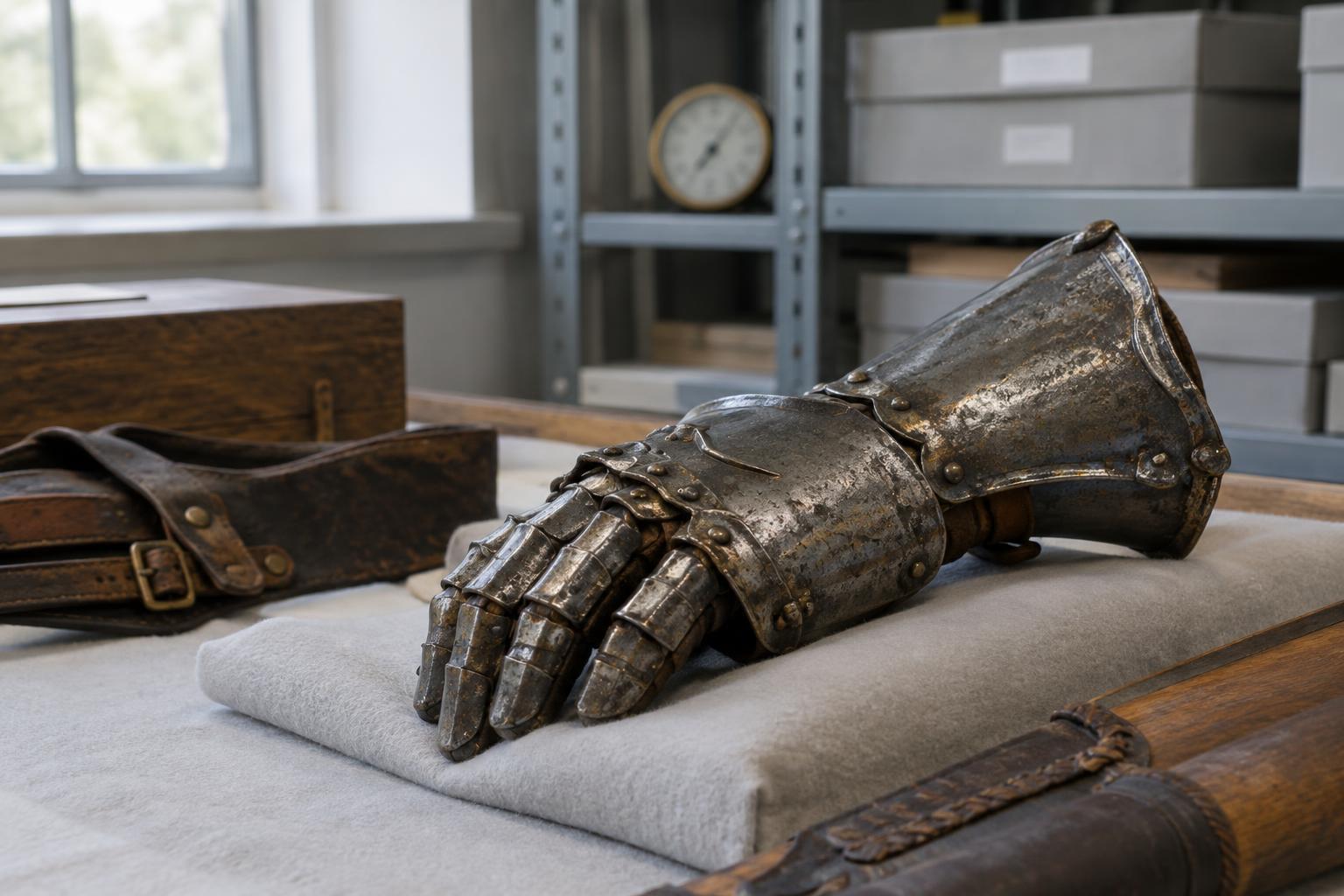
Good preventive care begins with a stable place to keep objects. Avoid locations prone to leaks, condensation, strong sunlight or abrupt changes in temperature and humidity. Keep items away from direct contact with materials that might stain, abrade or trap moisture against them. Supports and mounts should hold an object securely without concentrating pressure on fragile edges, fittings or textiles.
Mixed-material objects need particular attention. A piece of armour may combine metal, leather, fabric and wood, each of which responds differently to its surroundings. Inspecting a collection periodically can reveal changes such as new corrosion, lifting surfaces, pest activity or weakened stitching. Record what you see rather than immediately trying to correct it. Clear photographs and dated notes make it easier to distinguish gradual change from a feature that was already present.
Before considering an intervention
Begin by asking what problem the proposed work is meant to solve. Is the object actively changing, difficult to handle safely, or simply different from an idealized image of how it once looked? Those are different reasons for action. Establish what is known about its materials, previous repairs and provenance, and note where the answers remain uncertain. Comparison with documented objects can inform interpretation, but it does not prove that a missing detail on your piece once had the same form.
If direct treatment seems necessary, consult a conservator experienced with the relevant materials. Ask for an assessment of likely benefits, risks and alternatives, including the option of no treatment. It is also useful to discuss how any added material would be distinguished from the original and how the work would be recorded. An intervention that looks convincing today may make an object harder to interpret later if its extent is undocumented.
A record is part of responsible care
Keep acquisition information, existing photographs, condition notes and treatment records together, while identifying what is known and what is only attributed or believed. Photograph an object before and after any authorized work, and retain details of materials added or removed. This record serves future owners, researchers and conservators as well as the present collection.
Preventive conservation is not a promise that an object will never change. It is a habit of noticing risks early and making considered decisions. Restoration may have a place in some circumstances, particularly when its purpose and limits are clear. For historic arms and armour, however, the most respectful choice is often to preserve the evidence already present rather than recreate an appearance that cannot be known with certainty.