What provenance can—and cannot—tell you
Provenance is the history of an object’s ownership and custody: who held it, when, and how it passed from one person or institution to another. For historic arms and armour, that history can help explain an object’s cultural setting, its appearance in a collection, or changes made during its working life and later display. A well-supported chain may add interpretive value, but it should not be confused with proof of where an object was made or how it was used.
A provenance record is rarely complete. An invoice may establish a sale without identifying earlier owners; a museum label may repeat a tradition that was never verified. The collector’s task is not to turn every gap into a tidy story. It is to make the known history easy to follow, preserve the evidence behind each statement, and mark what remains uncertain.
Start with a clear object record
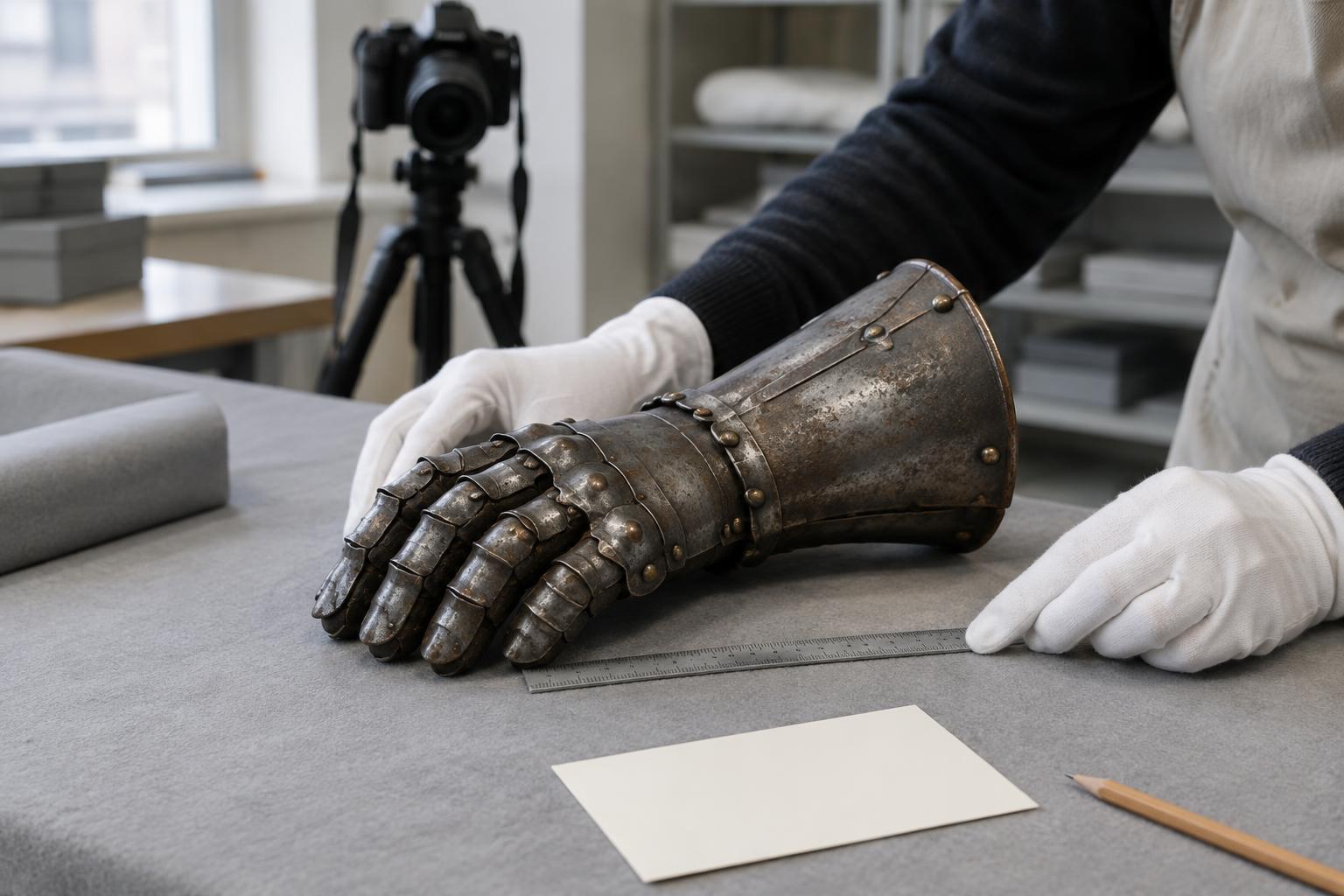
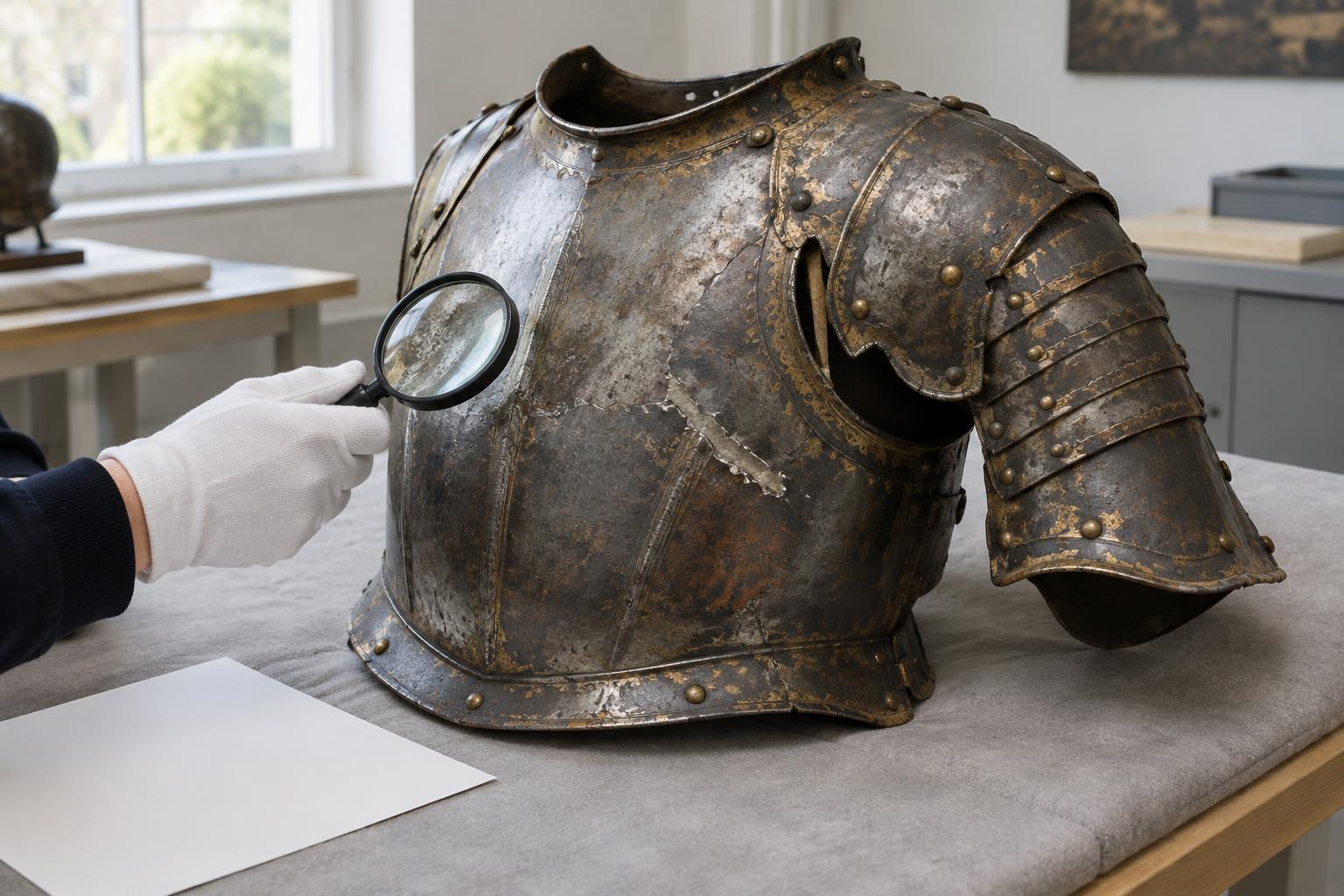
Before arranging ownership documents, make sure they can be connected to the object in hand. Record its dimensions, materials, visible marks, inscriptions, decoration, repairs and distinctive wear. Photograph the whole object and identifying details against a neutral background. Describe features as observed rather than forcing an attribution: “engraved floral border” is more useful as a record than an unsupported claim about a particular workshop.
Assign the object a stable inventory number and use it consistently on photographs, document scans and storage materials. Keep the record of its physical condition separate from claims about its history. If a mark is difficult to read, note the uncertainty and retain a close photograph; a later reader may interpret it differently. Avoid adding labels, adhesives or marks directly to a historic surface merely to make record-keeping easier.
Build a timeline from evidence
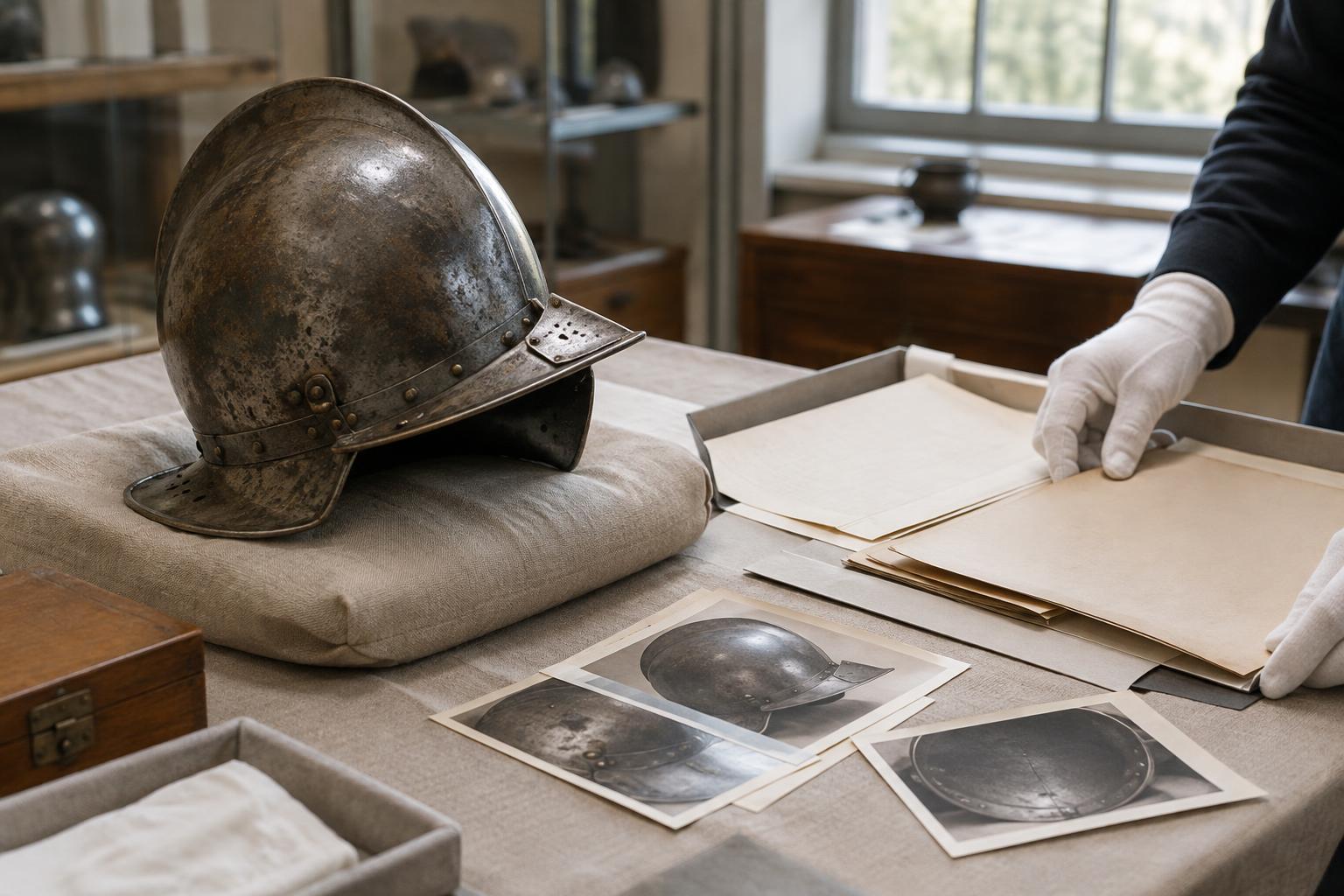
Put ownership and custody events in chronological order. Useful material may include invoices, receipts, correspondence, collection inventories, auction catalogue entries, exhibition records, old photographs and conservation reports. Record what each item actually establishes. A dated invoice naming a buyer supports a transaction; an old photograph showing a distinctive hilt or helmet fitting may help connect an object to an earlier collection. Neither automatically proves every claim in an accompanying description.
For each event, note the date or date range, the person or organisation involved, the type of event and the evidence supporting it. If an object was on loan or in storage, describe that as custody rather than ownership. Where possible, retain copies of the full documents, not just cropped images or transcribed highlights. Addresses, catalogue numbers and handwritten annotations may help future readers distinguish one object or collector from another.
Treat gaps and inherited stories honestly
Many objects arrive with family accounts, dealer descriptions or traditional attributions. These are worth recording, but their status should be clear. “Described in the 1980s catalogue as belonging to a named collection” is different from “owned by that collector.” Likewise, a story passed down within a family can be documented as a family tradition without being presented as an established fact.
Look for connections between sources rather than simply counting how many repeat a claim. Several later descriptions may all depend on one earlier catalogue entry. Compare identifying details, dates and names, and note contradictions instead of quietly choosing the most appealing version. An unexplained period in the timeline is a gap, not evidence of improper ownership or evidence that everything was in order. Recording that gap gives future researchers a useful starting point.
Keep the file useful for the next custodian
Store originals safely and keep legible digital copies with descriptive filenames. Link each document to the inventory number, and retain a simple index so that a reader can find the source behind a statement. Record when and from whom you received information; context can be lost even when the document itself survives. Back up digital files and review the record when new evidence or a revised attribution emerges, preserving earlier notes rather than silently replacing them.
Think carefully about sensitive information. A working file may contain personal contact details that need not appear in a public description, while the underlying ownership record may still be important to preserve. If questions arise about an object’s origin, removal or transfer, seek appropriate specialist guidance rather than treating a tidy file as a substitute for due diligence. The strongest provenance practice is modest and transparent: keep the evidence, explain your reasoning, and leave room for the history to be revised.