What counts as quilted armour?
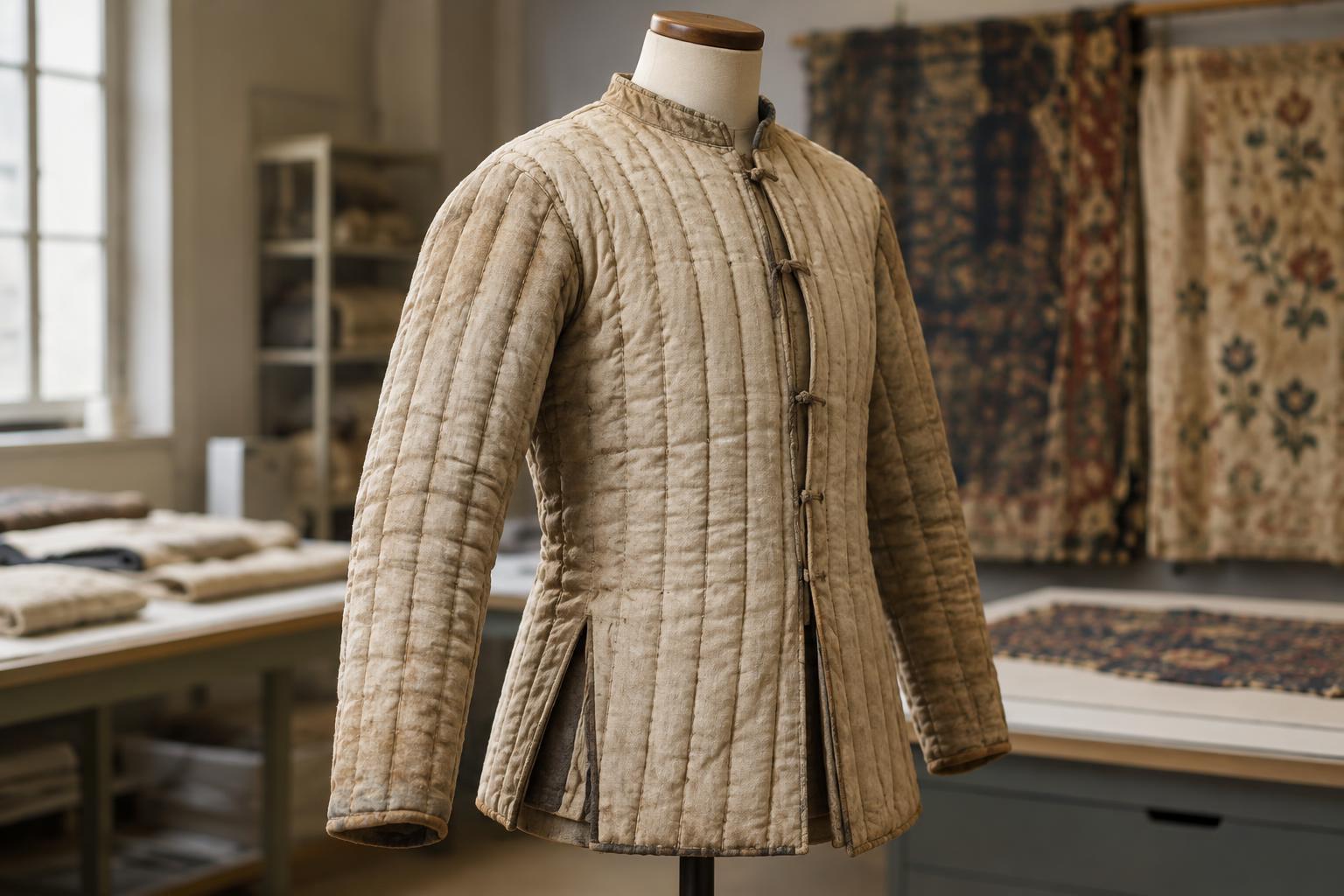
Quilted armour is a broad description for protective clothing made from layers of textile secured by stitching. Some garments used multiple layers of fabric; others enclosed padding between an outer cloth and a lining. Historical names, including gambeson, aketon and jack, do not always refer to identical constructions. Their meanings could vary by place, period and source, so it is more useful to examine a particular garment than to assume that one name describes a universal design.
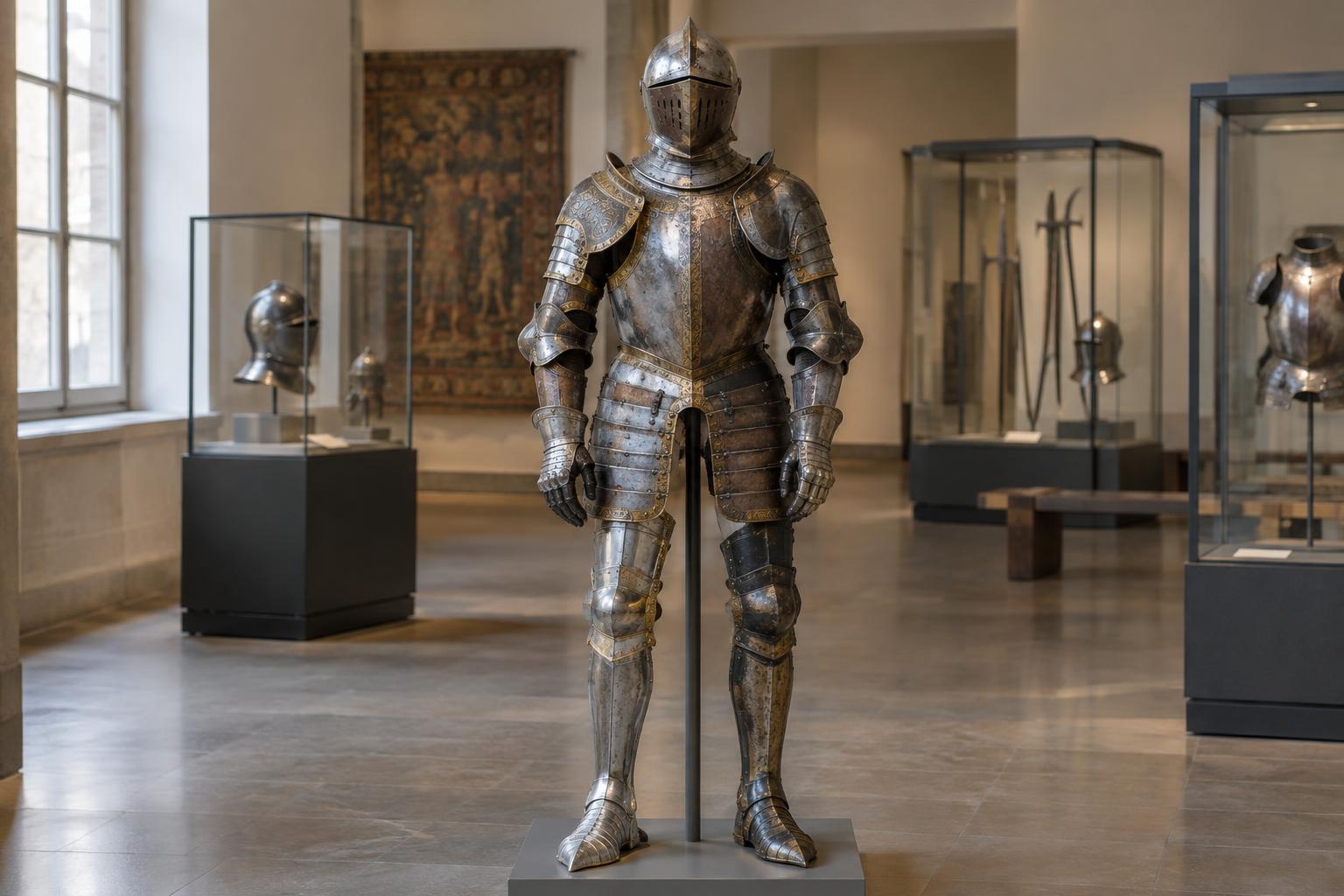
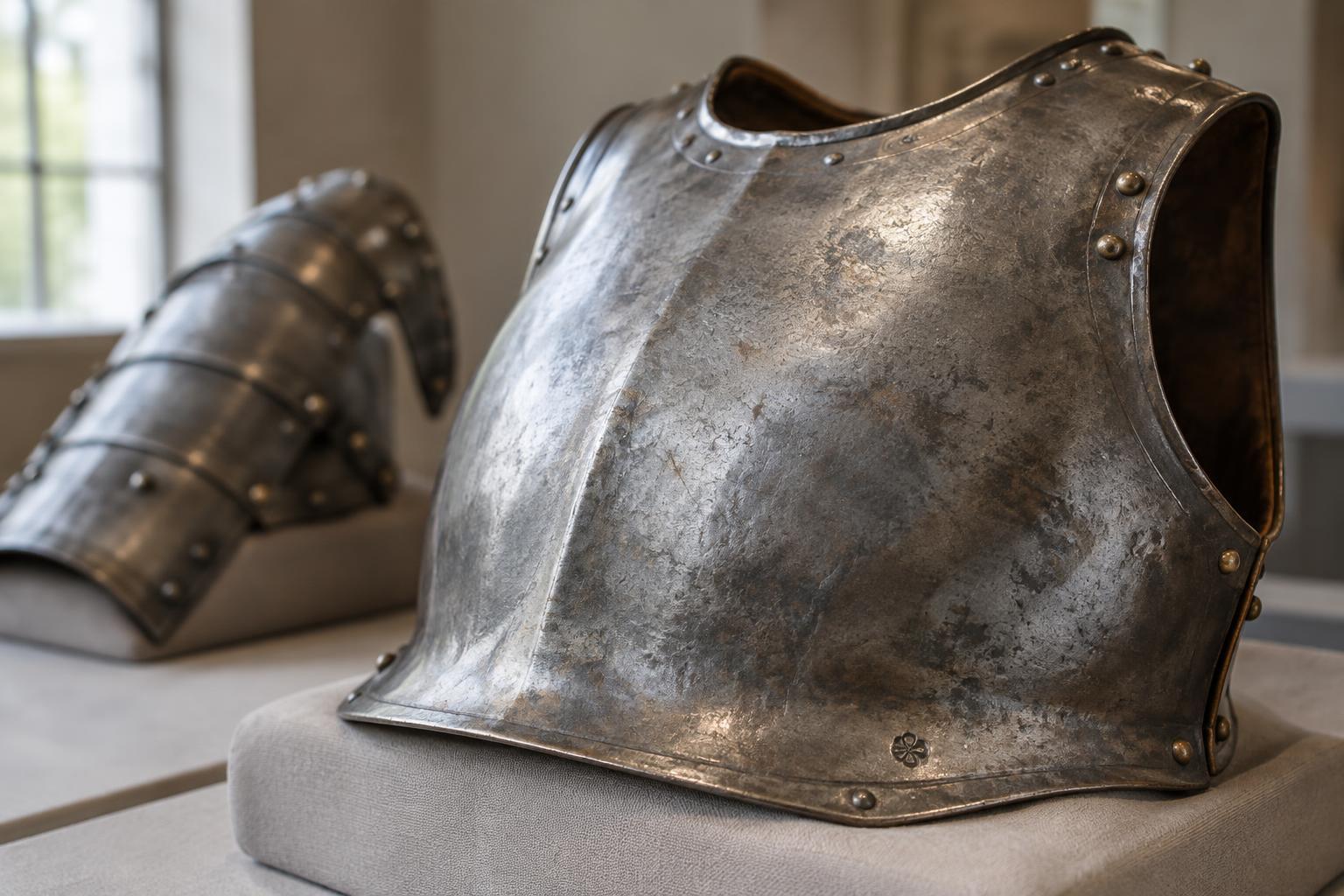
Textile armour appeared in many historical settings, both as protection in its own right and as clothing worn with metal armour. These roles placed different demands on a garment. A piece intended to sit beneath rigid equipment might be shaped to reduce rubbing and improve fit, while one worn as an outer layer could have a different cut and finish. Neither role was necessarily simple or inexpensive: substantial cloth, skilled sewing and repeated fitting all represented work.
Layers, padding and the work of stitching
The materials available to a maker depended on local supply, cost and the intended use of the garment. Linen, wool and other textiles could form outer layers, linings or internal layers. Padding might consist of loose fibres or fabric rather than a single uniform filling. Surviving pieces and written descriptions show variation, but they rarely justify a single recipe for all quilted armour.
Stitching gave the layers their structure. Parallel lines, channels and other sewn patterns helped keep material in place and could shape how a garment bent around the body. A maker also had to consider seams, openings and edges, where several layers came together. These details mattered to comfort and durability as well as appearance. In a museum case, the regularity of the stitching can make a garment look straightforward; up close, its curves and joins reveal careful decisions about how flat cloth would become wearable clothing.
Thickness alone does not explain the quality of a historic garment. Dense layers could make movement difficult, while poorly distributed padding might bunch or shift. The balance among coverage, weight and flexibility depended on the wearer's needs. Because textiles change through wear and later repair, the thickness visible today may not be exactly what its maker intended.
How it was worn
Quilted garments were cut for bodies in motion, not simply hung like blankets. Sleeves, skirts, collars and closures could all affect how a person moved and how other equipment sat over the cloth. Some garments were meant to cover much of the torso and arms; others served a more particular purpose within an ensemble. The fit seen on a display mannequin may therefore tell only part of the story, especially if the original wearer also used belts or additional armour.
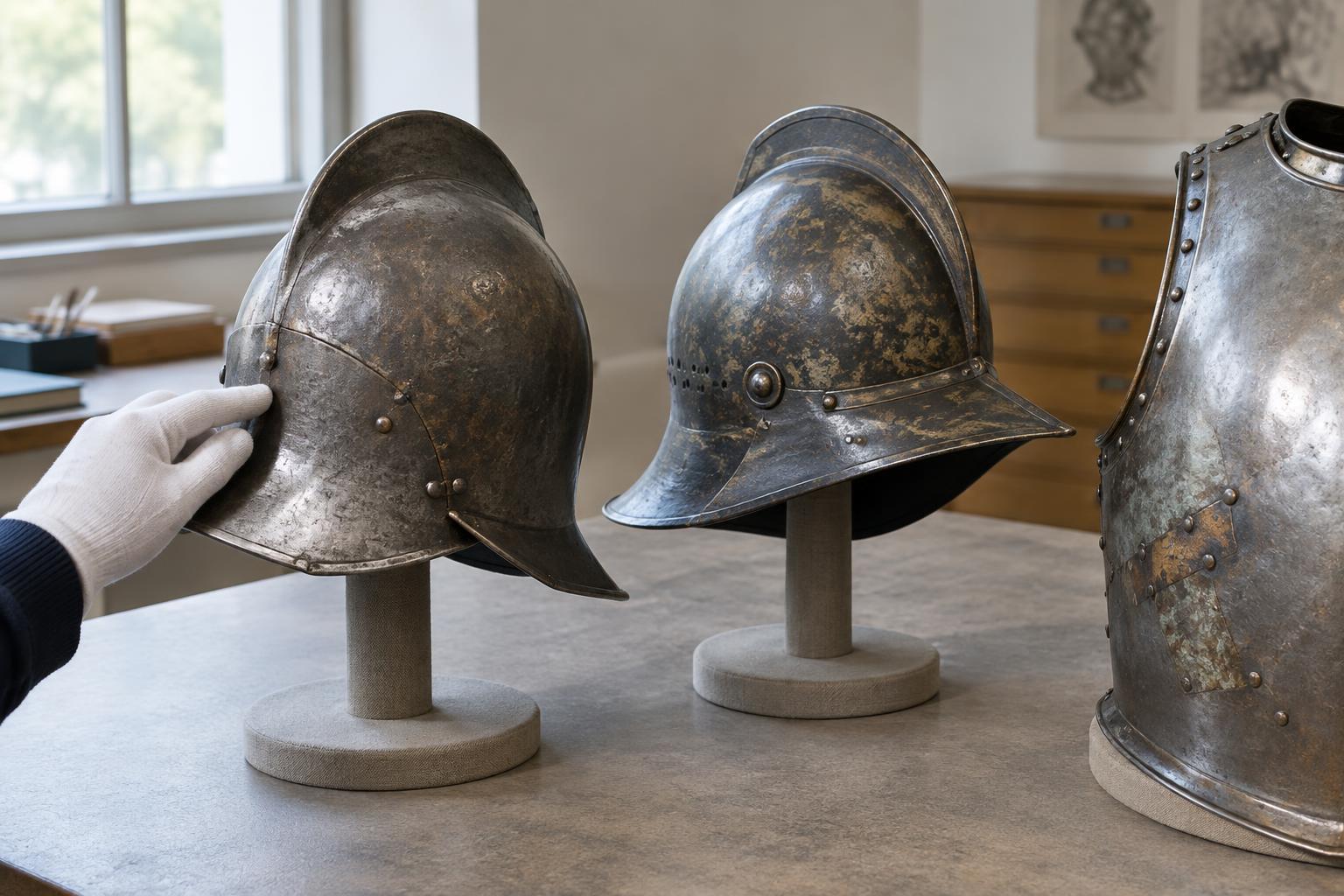
Wearing textile and metal protection together did not mean that every layer was interchangeable. The shape of a metal piece, the fastening points of a garment and the space needed for movement had to work together. Historic images can suggest combinations, but artists also simplified clothing or emphasized status and symbolism. Surviving objects offer another kind of evidence, though a detached garment seldom preserves the full outfit with which it was worn.
Reading surviving examples with care
Textiles are vulnerable to moisture, insects, handling and repeated use. As a result, surviving quilted armour may be altered, incomplete or unusually well preserved compared with what was once common. Repairs can be especially informative: an added patch or replaced fastening shows that a garment continued to have value after its first making. Yet a repair can also obscure the original design.
Museum interpretation benefits from showing both craftsmanship and uncertainty. Labels can identify visible materials and construction features while distinguishing them from conclusions drawn from comparison or written records. Displaying a garment's lining, seams or worn edges, when conservation permits, helps visitors see it as a made and used object rather than a flat illustration of an armour type.
Why textile armour deserves attention
Metal armour often draws the eye, but quilted armour brings different makers and skills into view. Spinning, weaving, cutting, sewing and fitting all contributed to a finished garment. Its surface might also communicate care, expense or a wearer's place in a group, even where its decorative meaning is uncertain.
Looking closely at layered textiles changes the question from “Did it work?” to “How was it made, fitted, maintained and understood?” That approach respects the limits of the evidence while revealing the labour behind an object that may appear modest beside polished metal. Quilted armour was clothing, craft and protection at once—and each surviving piece has its own construction to explain.