Begin with a plan, not a handhold
A historic object may look sturdier than it is. A sword hilt can conceal a loose joint; a helmet may carry an old repair; leather straps that once held a piece of armour together may now be brittle. Before moving anything, look for detached parts, cracks, flaking decoration, corrosion and unstable mounts. If its condition is uncertain, leave it in place until someone with appropriate conservation experience can assess it.
Prepare a clear route and a stable, padded surface before lifting. Keep food, drinks, pets and unnecessary visitors away from the work area. A second person can help with a large or awkward object, but agree in advance who will direct the move. Rushing to catch a slipping piece can injure someone or damage another part of the collection; a deliberate setup is safer than an improvised rescue.
Treat hazards and fragile details with equal respect
Historic arms should not be handled as functional equipment. Edges and points can injure even when they appear dull. An unfamiliar historic firearm should be treated as potentially hazardous and should not be opened, tested or otherwise manipulated by an unqualified person. If there is any doubt about its condition, restrict access and seek help from an appropriately qualified specialist. Collecting, display and conservation do not require an object to be operated.
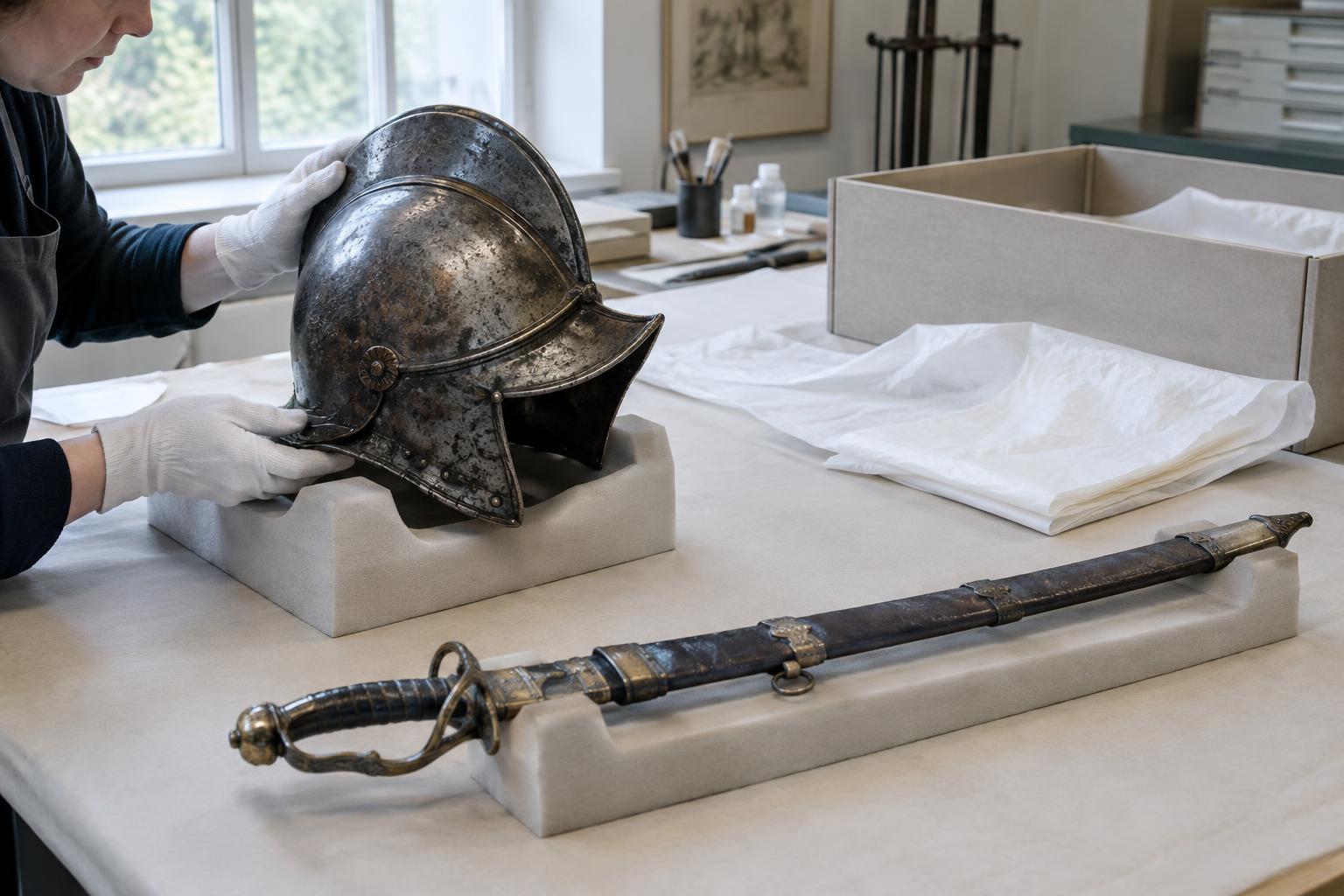
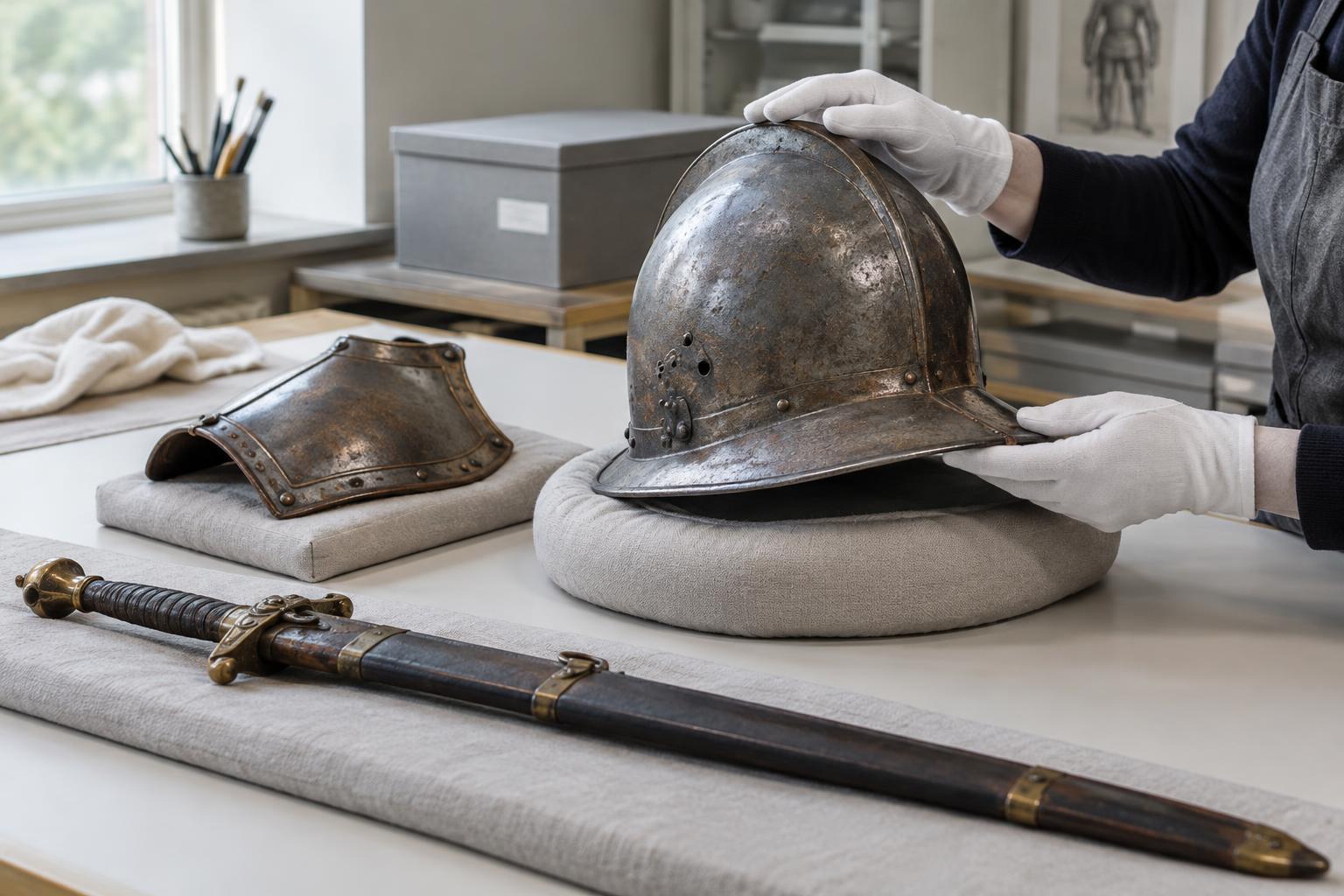
The most convenient place to grip is not always the strongest. Avoid lifting a sword by its scabbard, a helmet by its crest or armour by straps and hinges unless a conservator has established that those parts can bear weight. Support the main body of an object and keep loose components together without forcing them into position. Decorative surfaces deserve particular care: gilding, paint, inlay and old labels can be lost through a brief rub against clothing or a tabletop.
Keep contact controlled and surfaces protected
Clean, dry hands may offer a secure grip on some stable materials, while suitable gloves can help limit fingerprints on others. Neither approach works for every object: slippery gloves may make a heavy piece harder to hold, and bare hands can leave oils on polished metal. Choose a method that gives secure control while protecting the particular surface, and ask a conservator when a finish is fragile or unfamiliar. Remove jewellery and avoid sleeves or fasteners that could snag projecting details.
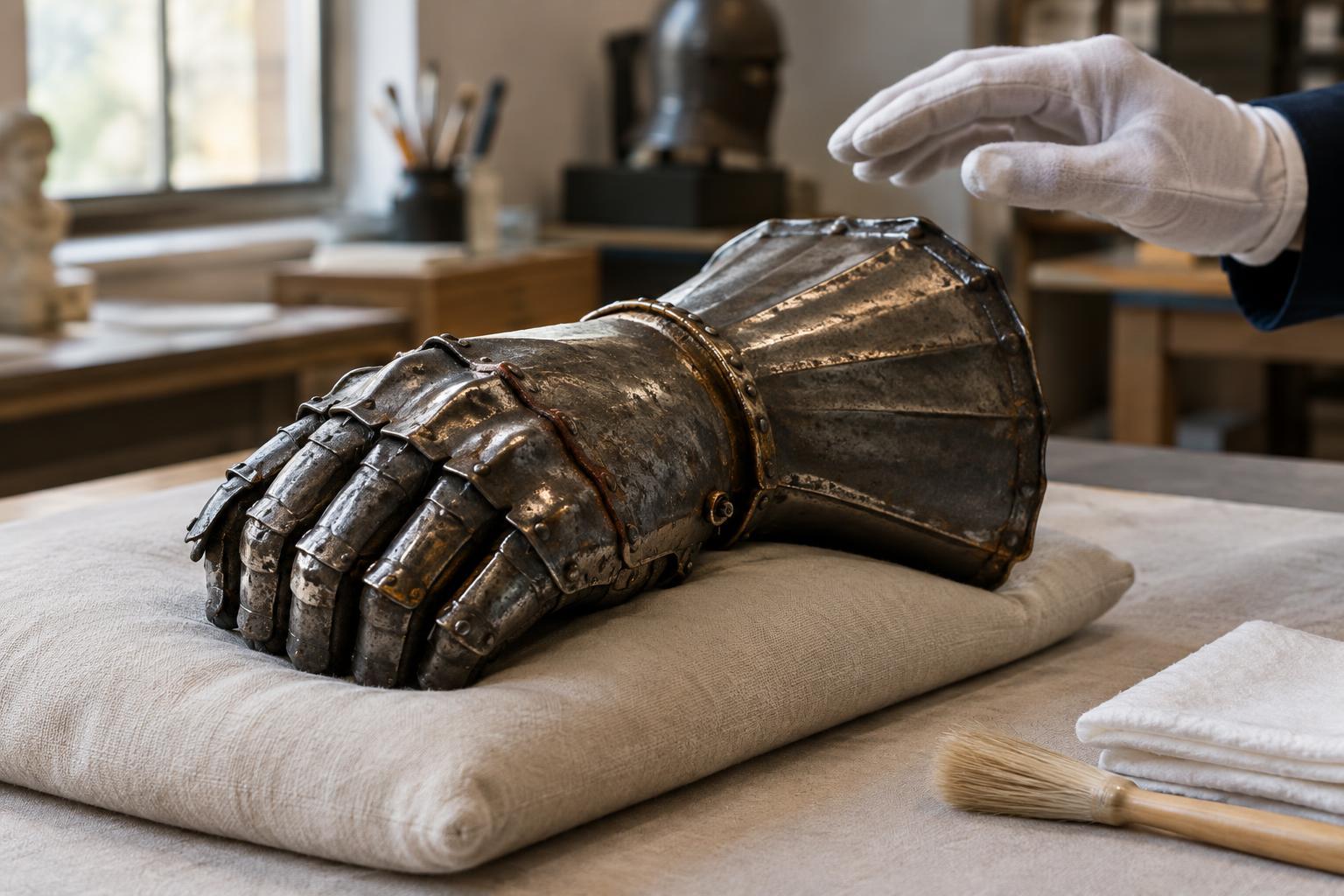
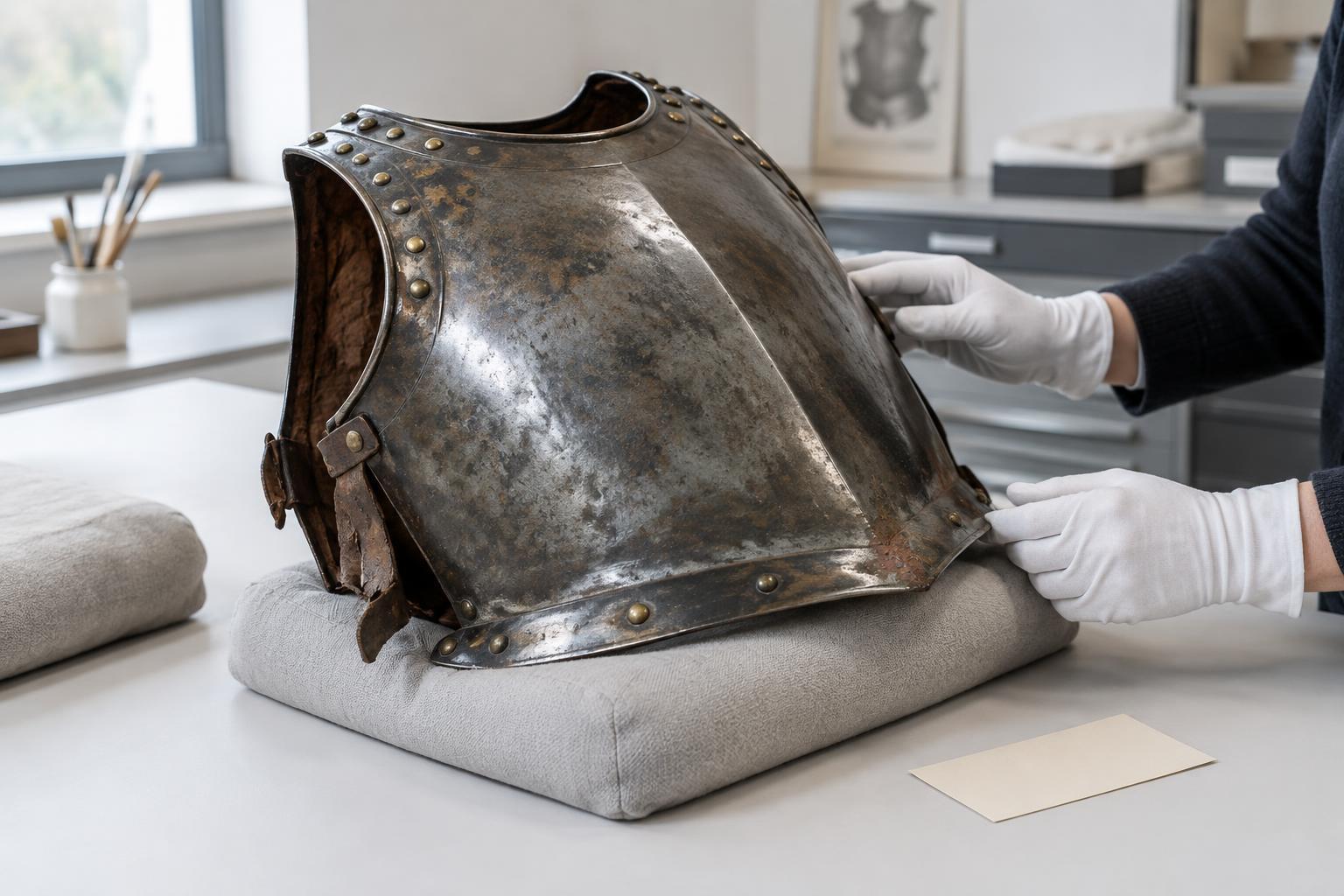
Use a clean, cushioned support when examining an item, and set it down fully before changing your grip. Separate detachable pieces so they cannot strike one another, but do not dismantle an object merely to make handling easier. Historic residues, old repairs and corrosion products may pose health concerns or carry evidence of an object's history. Avoid dry brushing, scraping or applying household cleaners; isolate a concerning item from routine handling and obtain specialist advice.
Make display and storage part of the safety routine
Many handling accidents begin with a poor display or storage arrangement. A stand should support the object's weight without pressing on a fragile point, and a wall mount should not rely on an old strap or fitting. Keep sharp or heavy pieces where they cannot be knocked down or reached casually. If an object must be removed frequently for study, its storage should allow that movement without dragging it past neighbouring items.
Stable conditions also reduce the need to intervene. Dampness can encourage corrosion and mould, while abrupt changes in the surrounding environment may stress combinations of metal, wood, leather and textile. Rather than repeatedly polishing or treating an object, watch for changes and record them. A dated photograph taken from the same viewpoint can help distinguish an existing mark from a new concern without excessive handling.
Document what you do—and when to stop
A short object record makes careful handling easier for everyone in a household or collection. Note vulnerable areas, loose elements, how the object is supported and any known past repairs. Keep accessories and labels associated with the correct item. These records preserve context as well as condition: a scabbard, display mount or old collection label may help explain how an object was used, valued or interpreted over time.
The most useful handling principle is knowing when not to proceed. If a piece feels unstable, is too heavy to control comfortably, has an uncertain hazard or requires force to remove from its mount, stop. Seek qualified assistance rather than making the object fit the task. In a private collection, restraint is not neglect; it is often the best way to preserve historic craftsmanship and keep people safe.