Why fastenings deserve a closer look
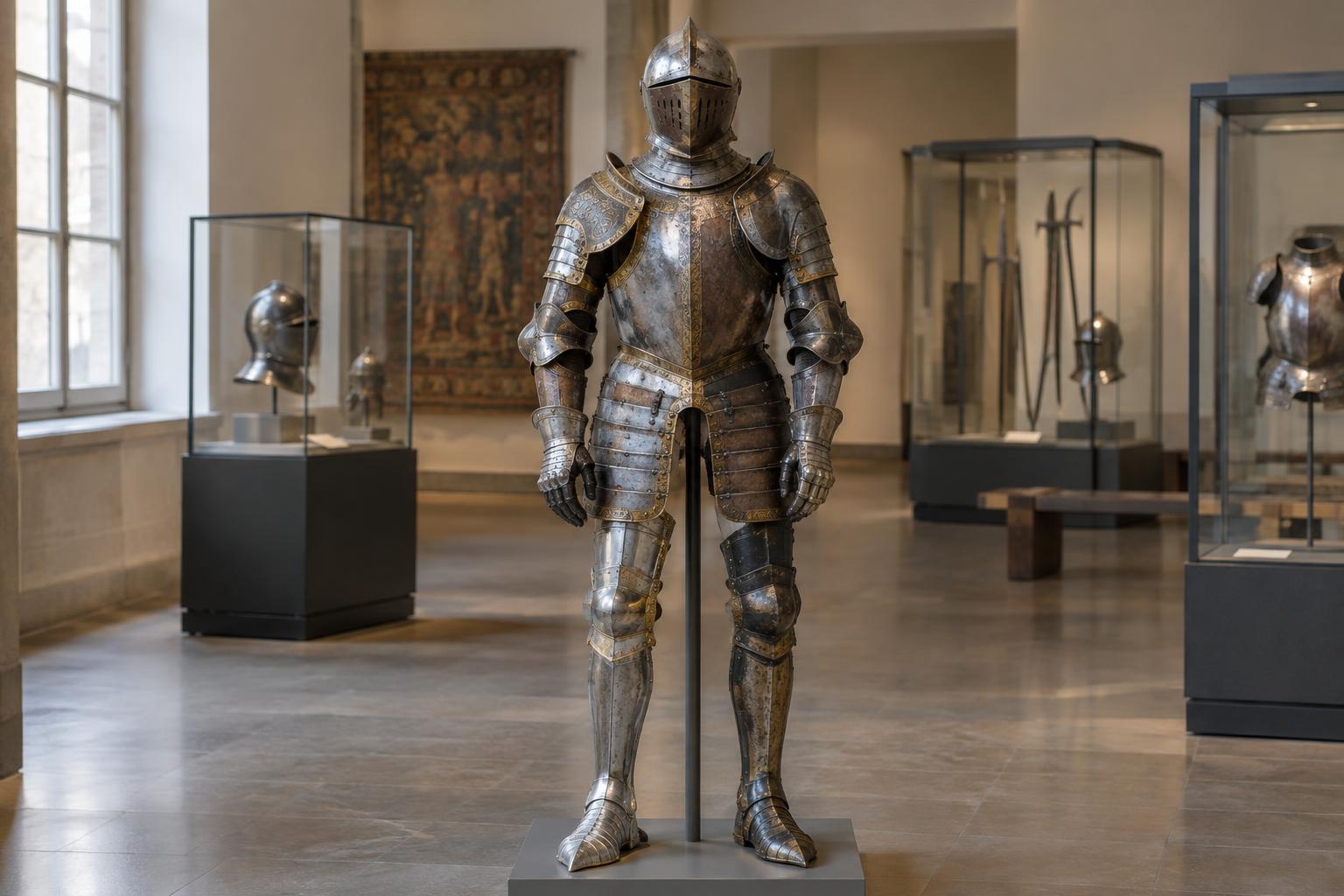
A suit of armour is often presented as a single, gleaming object. Historically, it was an assembly of parts made from different materials and maintained over time. Alongside metal plates were leather, textile, cord and small metal fittings. Some connected one piece of armour to another; others linked armour to clothing or allowed a section to open. Without these less conspicuous elements, the form visible in a museum gallery would be difficult to understand.
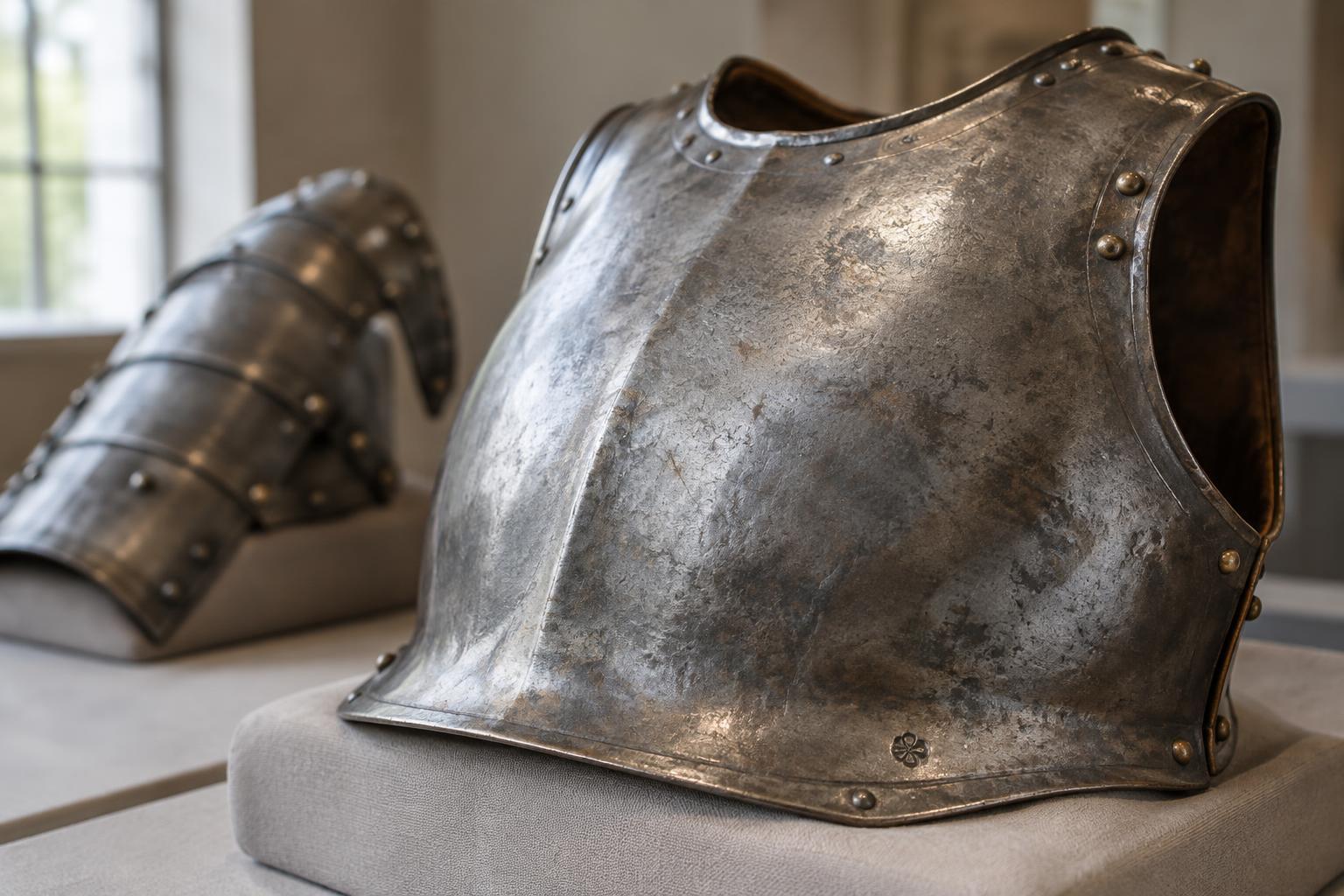
Fastenings also carry evidence of human choices. Their placement can suggest how a maker expected plates to move together, while their materials and finish may reflect the resources available to a workshop or patron. A surviving fastening is not necessarily original to the plate beside it, however. Repairs, alterations and later display work can all change an object’s appearance. The most useful question is often not simply “What is this fitting?” but “What part of this object’s history might it represent?”
Straps and buckles: familiar forms, variable histories
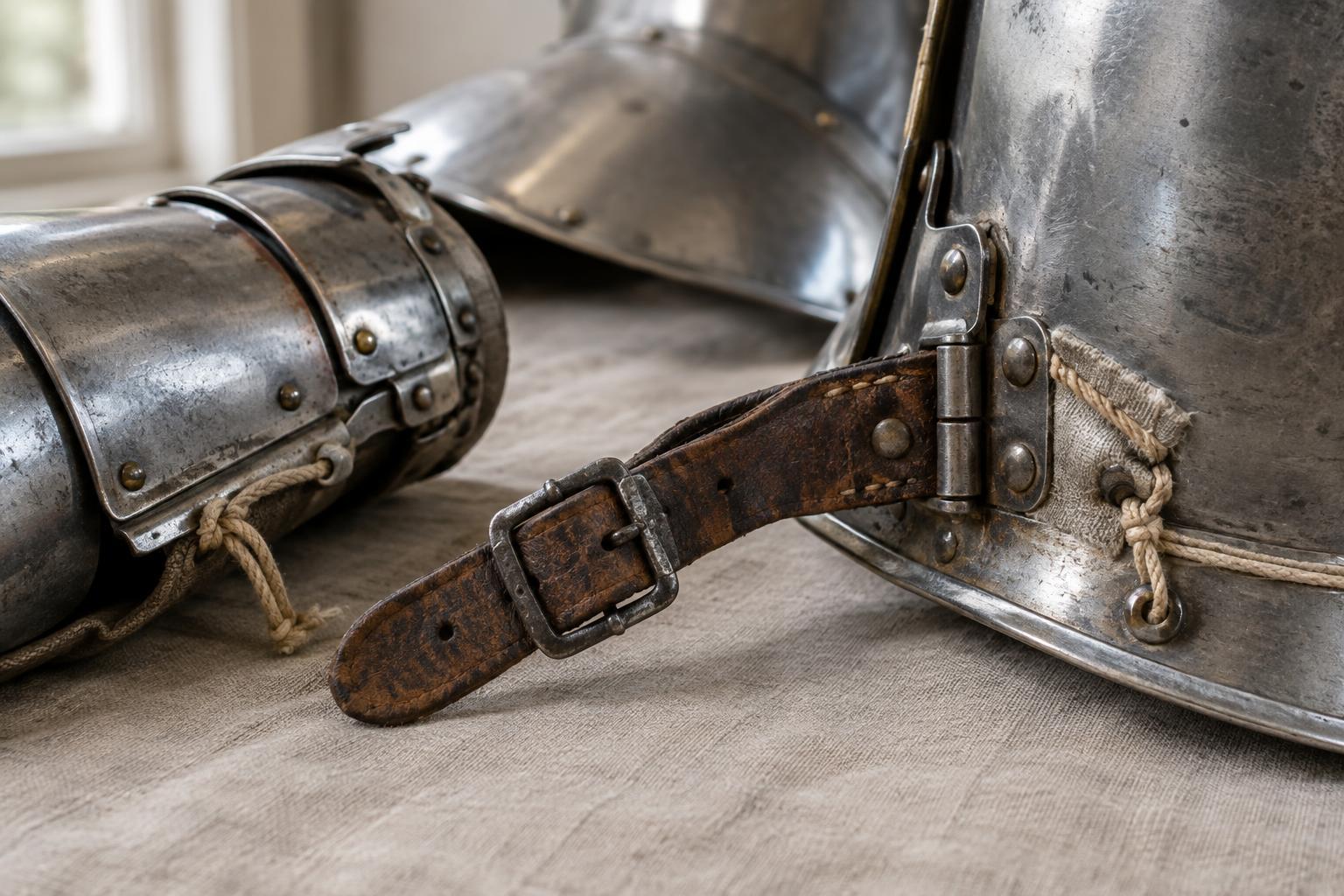
Leather straps and metal buckles are among the most recognisable armour fastenings. Straps could connect separate plates or help keep a component in its intended position. Buckles offered an adjustable closure, a valuable quality when an item needed to accommodate layers of clothing or changes in its wearer’s equipment. Their scale and shape varied with the armour’s design; a small buckle may be easy to miss beside a large plate.
Leather seldom ages like metal. It can shrink, stiffen, break or disappear, leaving a buckle attached to little more than a fragment. Conversely, a complete-looking strap on an old piece of armour may be a later replacement. That does not make it irrelevant: a replacement may document a period of continued use, an earlier restoration or a museum’s attempt to make a fragmented object intelligible. Descriptions that distinguish surviving material from later additions give visitors a clearer picture than the word “original” used without qualification.
Points and the textile connection
Points were ties, often made of cord or textile, associated with securing elements of dress and armour. They remind us that historic armour was not only a metalworking achievement. Clothing and textile layers formed part of the wider ensemble, and the relationship between them affected how its components were presented and worn. Small holes or fittings on a plate can be clues to those connections, though their purpose should not be assumed from appearance alone.
Textiles are particularly vulnerable to wear and decay, so a surviving armoured object may preserve little direct evidence of its former ties. Images and surviving garments can help interpreters frame possibilities, but they do not automatically supply a pattern for any individual object. In a gallery, a reconstruction may make the relationship between armour and clothing easier to see. It is most informative when labelled as a reconstruction rather than allowed to blend silently with surviving historic material.
Hinges and the craft of moving parts
Hinges show another side of armour-making: the challenge of connecting rigid pieces while preserving a coherent overall shape. They appear in different forms and locations across historic armour. Some are conspicuous, with shaped metalwork that contributes to the object’s visual rhythm. Others sit quietly at an edge, where they can be overshadowed by engraving, gilding or the silhouette of a helmet or breastplate.
The hinge itself may bear marks of manufacture, wear or repair. Rivets and neighbouring holes can offer clues to changes, but interpreting them calls for care. An extra hole might relate to an alteration, a lost fitting or a later intervention; the visible trace alone may not settle the question. Looking at both the hinge and the plate around it helps reveal armour as an object with a working history, not merely a finished design frozen at the moment it left a workshop.
Reading fastenings in collections
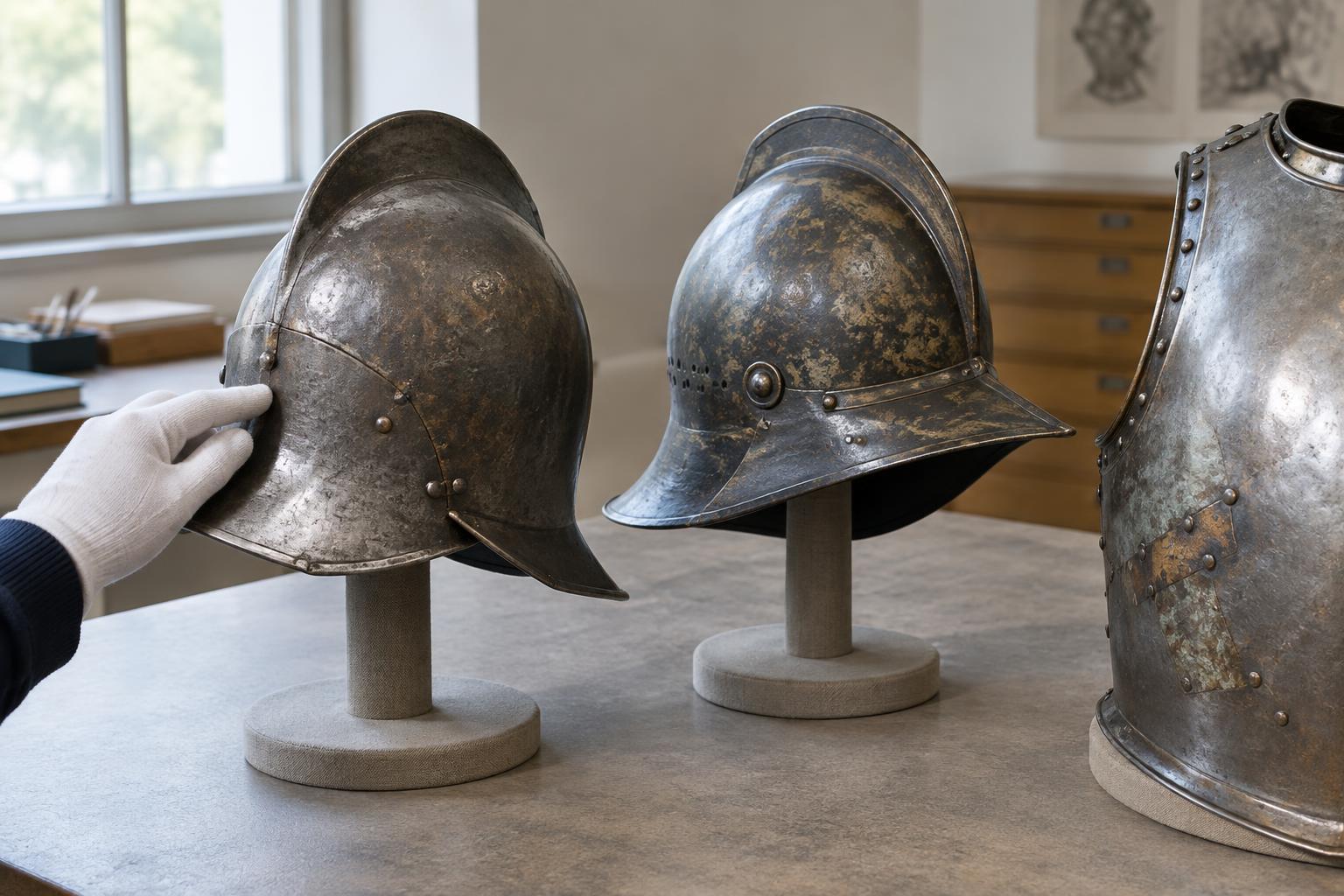
For collectors and museum visitors, fastenings offer a useful way to look beyond an object’s most dramatic features. Note whether materials differ across a group of fittings, whether one area shows more wear than another, and whether labels identify replacement parts. These observations need not lead to a firm conclusion. They can instead prompt better questions about manufacture, ownership, repair and display.
For conservators, the mixed materials of a fastening present a particular interpretive challenge: preserving what survives while keeping later additions legible. Cleaning or replacing a fragile component can affect the evidence available to future viewers, which is why documentation matters. The humble strap, point, buckle or hinge may seem secondary to the armour it accompanies. In fact, each can hold a small but valuable part of the object’s story.