The history attached to an object
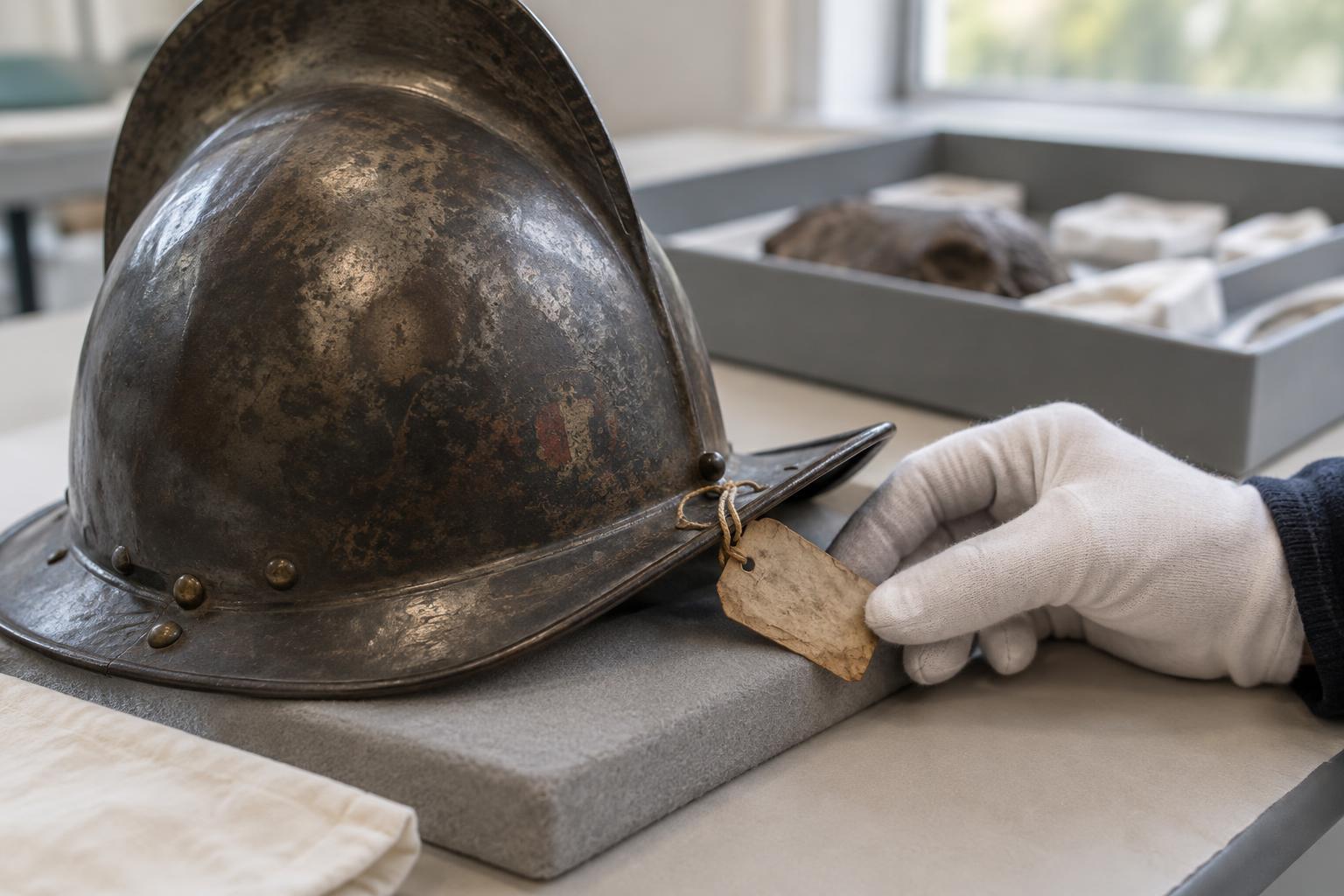
A helmet, sword or piece of armour may carry more than the marks left by its maker and use. A paper ticket tied to a strap, a number painted inside a plate or a label pasted to an old mount can record a later chapter of its life. Such additions may show that an object entered a private collection, appeared in an exhibition or was catalogued by a museum. They are evidence of how people encountered and understood the object after its original period of use.
These modest traces are easy to overlook. A tag can seem less important than decorated metalwork, while an untidy number may look like a blemish. Yet removing either one can break a link between the object and a surviving inventory, photograph or catalogue. For anyone studying or caring for historic arms and armour, the first useful habit is to regard old collection markings as part of the object’s documented history, not simply as clutter.
Reading a mark without asking it to prove too much
An inventory number is most useful when it can be matched to another record. A ledger entry bearing the same number might give a description, a former owner or a location within a collection. Its wording still requires scrutiny: a short entry may refer to several similar objects, and a number may have been reused or copied incorrectly. Placement, handwriting, label material and the manner of attachment can help distinguish one phase of cataloguing from another, but they rarely provide a secure date on their own.
Old labels can preserve interpretations as well as facts. A collector may have identified a piece according to the knowledge or fashion of the time. Later study may reach a different conclusion about its origin, date or completeness. That does not make the label worthless. It tells us what someone once believed and may explain why the object was displayed beside particular pieces or described in a particular way. The object’s history and the history of its interpretation are related, but they are not identical.
Following connections across a collection
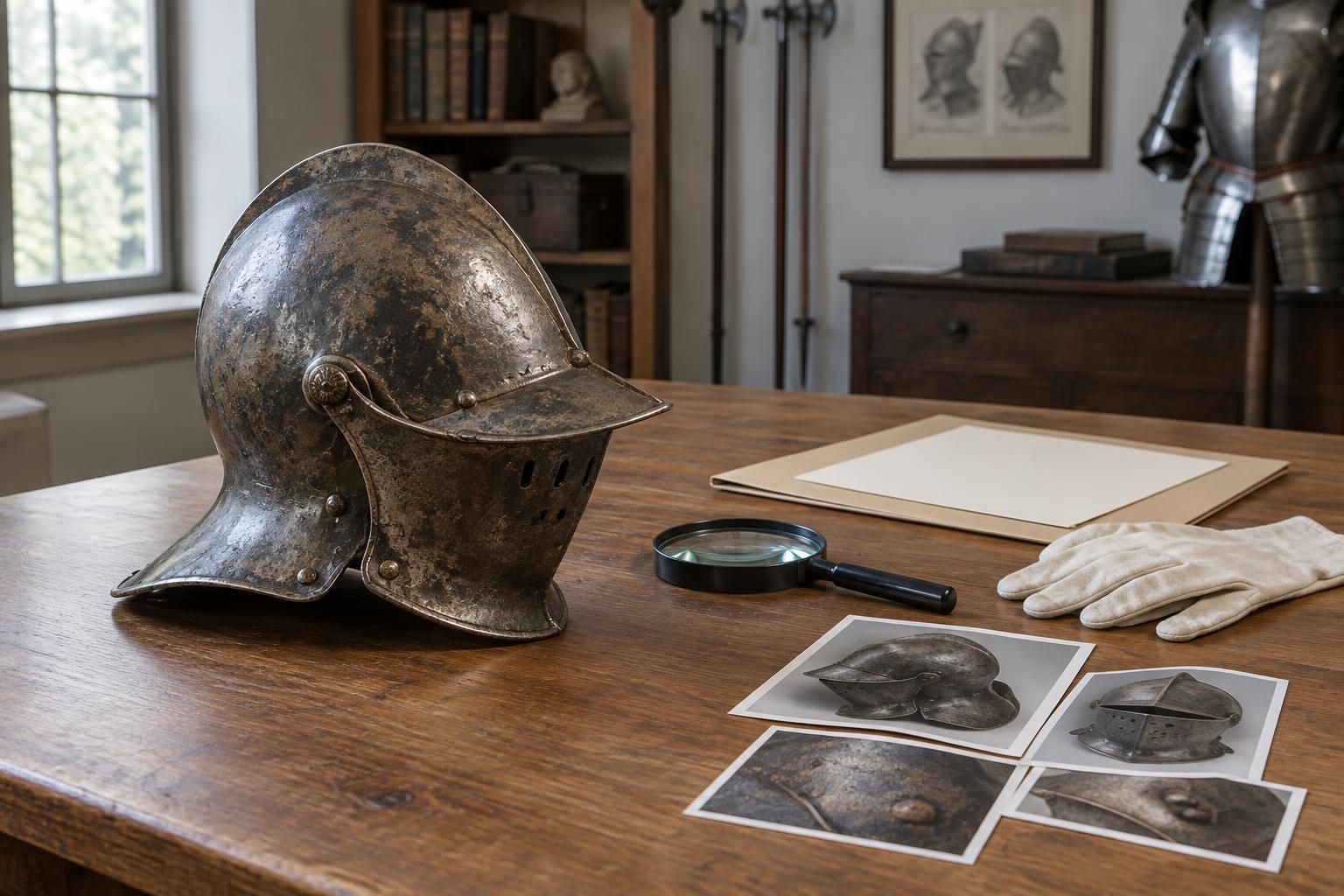
A number or tag becomes more informative when considered alongside photographs, display mounts, storage boxes and written records. A historic photograph might show a breastplate with the same label visible at its edge. An exhibition list might connect a numbered sword to a lender. A box inscription could preserve a name absent from the object itself. Each connection should be recorded with its degree of certainty: a clear number match is different from a resemblance between two objects in a crowded photograph.
This approach is particularly useful for objects that have been rearranged. Armour assembled for display may contain elements with different collection histories, while a scabbard and sword kept together today need not always have formed a pair. Separate labels can help reveal these changes. Conversely, matching labels do not by themselves prove that components belonged together in their original setting. They may only show that a later collector grouped them.
Preserving fragile evidence
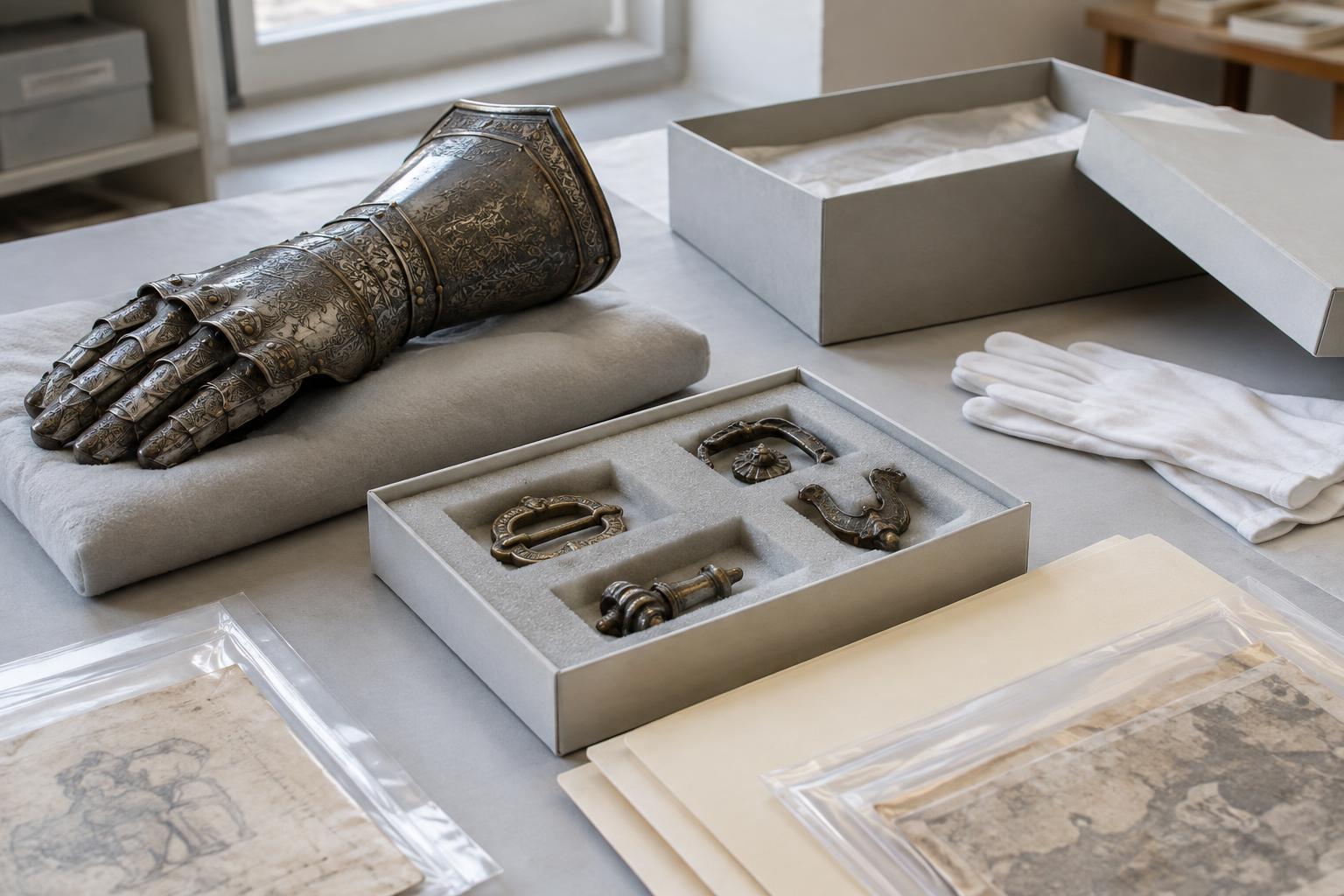
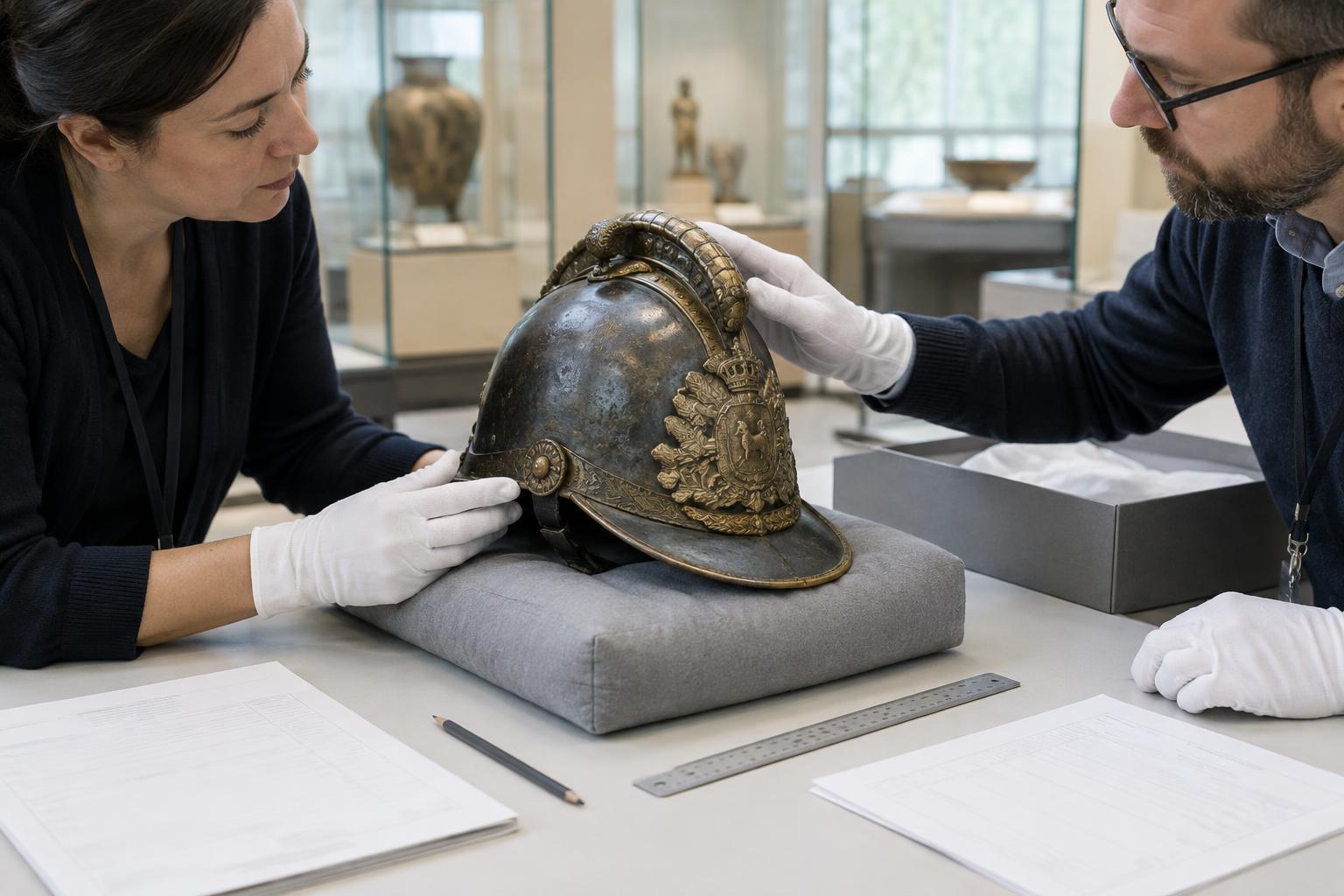
Collection marks may be more vulnerable than the objects they accompany. Ink can fade, paper can tear and an old adhesive can fail. A sensible record includes clear photographs of the mark in place and close views of its text, along with a transcription that notes uncertain letters rather than silently guessing them. Recording its exact location matters too: a number inside a helmet and one on a separate stand may have different relationships to the object.
Avoid treating an illegible or apparently incorrect label as disposable. Even a mistake can be informative if it can be linked to an earlier catalogue or display. Equally, do not assume that every mark is old merely because it looks worn. If a label is loose, obscures a surface or appears to be causing damage, its treatment calls for careful documentation and, where appropriate, advice from a qualified conservator. Preservation is not always the same as leaving a failing attachment untouched, but any change should keep the evidence traceable.
A fuller account of an object’s life
The most responsible description keeps different kinds of evidence distinct. It can state what is physically present, identify records that appear to correspond, and explain where the links remain uncertain. That clarity helps readers understand both the historic object and the route by which it reached its present collection.
Labels and inventory numbers seldom provide a complete biography. They can, however, open questions that craftsmanship alone cannot answer: who collected an object, how it was classified and how its meaning changed on display. Keeping those small traces legible and connected to their records gives future researchers the chance to revisit the evidence—and perhaps tell the story more accurately.