Start with a question, not a row of objects
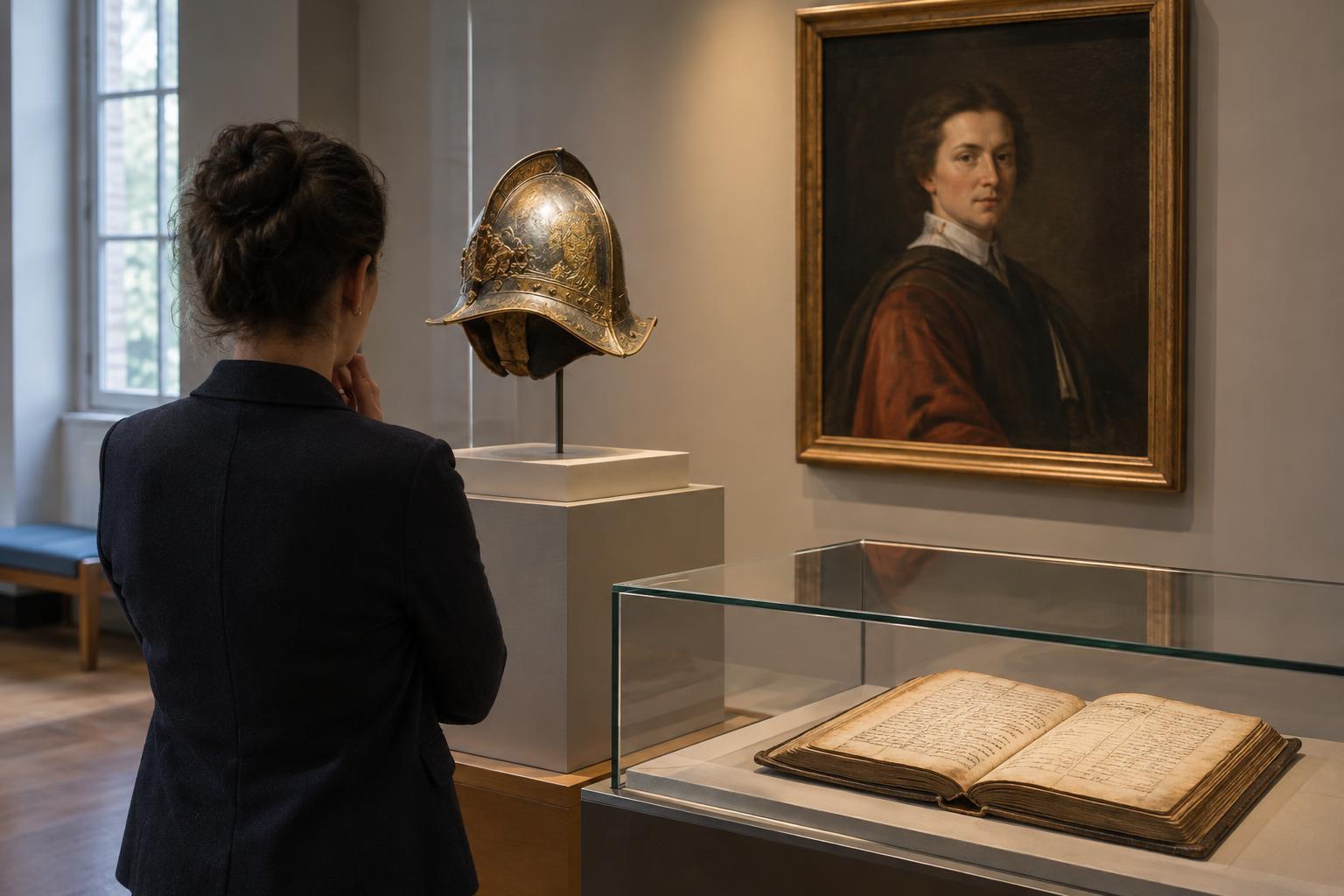
An exhibition is more than a selection of remarkable things. Curators usually begin with a question they want visitors to explore: Who made an object? Who used or owned it? What did it communicate to its original audience? The answers help determine which objects belong together. A helmet might appear beside a portrait because the pairing raises questions about status and self-presentation, even if the two objects were never in the same room historically.
The exhibition’s subject also sets its boundaries. A display about armour-making might bring together finished pieces, workshop tools and images of craftspeople. A display about ceremony might favour objects that show how communities represented authority. Neither selection tells the whole history of arms and armour. A useful exhibition makes its chosen angle clear, so visitors understand why some objects are present and others are not.
Look for connections the objects can support
Objects can be grouped by maker, place, period, material, use or later collecting history. These links are not equally certain. An inscription may name an owner, while a resemblance between two decorative patterns may only suggest a shared fashion. Curators weigh such evidence before asking a display to carry a particular story. When a connection remains uncertain, a label can say so rather than turning a possibility into a fact.
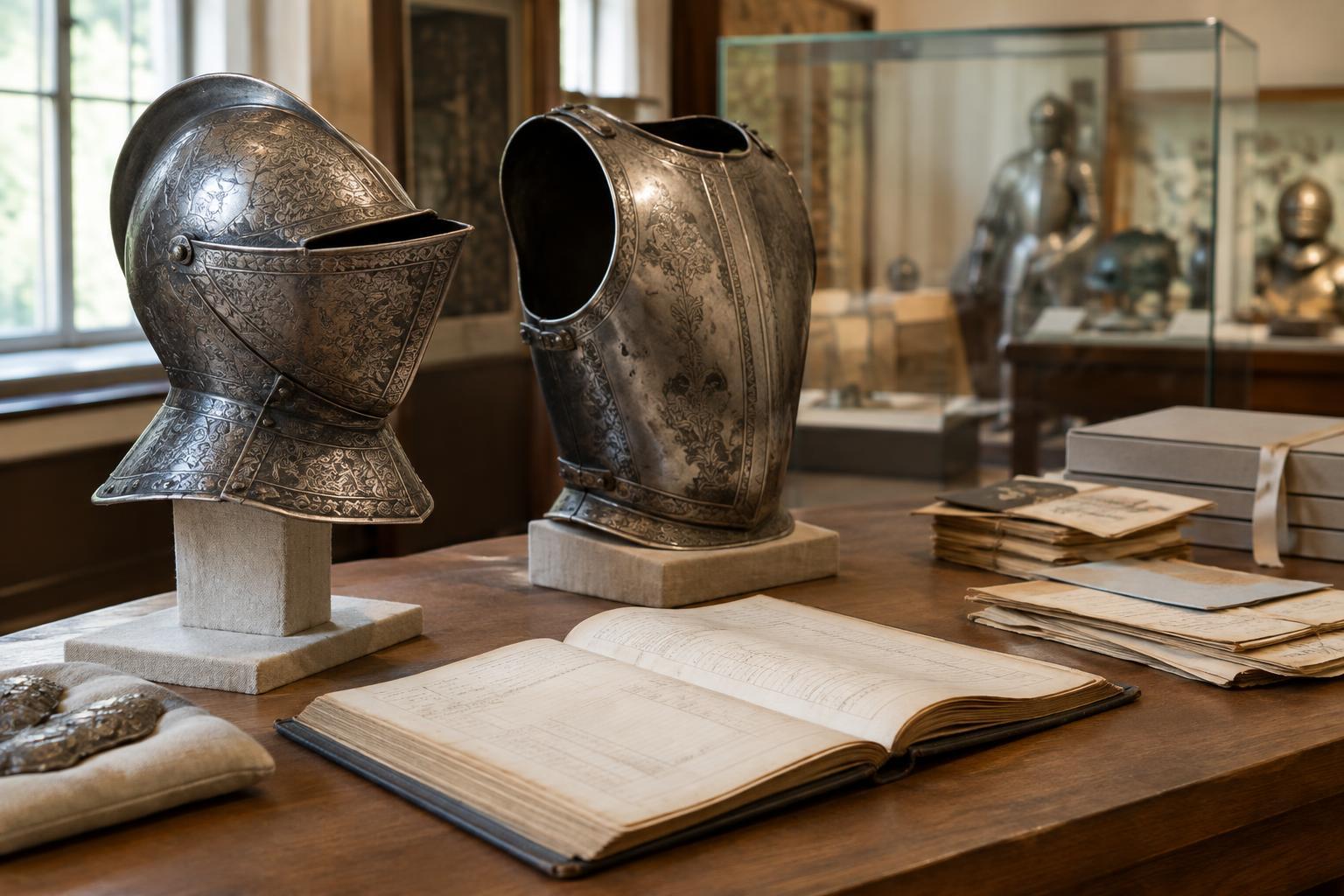
An especially effective grouping lets different kinds of evidence speak to one another. A decorated piece of armour can show choices in metalworking and design; a contemporary image may suggest how similar armour was represented; a household record might reveal how such possessions were described. Together they offer a fuller picture, but they may also disagree. Those differences can be worth displaying: an idealised portrait, for example, need not be treated as a straightforward record of everyday appearance.
Make the arrangement readable
Placement changes what visitors notice. Putting objects side by side invites comparison, while separating them can mark a change in time, place or perspective. A case containing several helmets might draw attention to differences in form and decoration. The same helmets distributed among portraits, textiles and documents could instead help tell stories about identity, trade or remembrance. There is no single correct arrangement; the layout should serve the exhibition’s question.
Labels, lighting and sightlines help visitors follow that arrangement without assuming specialist knowledge. A short label can identify what is known, explain why an object matters in this grouping and point out one detail worth looking for. It can also distinguish an object’s original setting from its later life in a collection. Historic arms and armour may have been repaired, altered, inherited or displayed long after their first use. Showing that layered history can be more illuminating than treating each piece as frozen at the moment it was made.
Account for the people behind the collection
A museum’s holdings are shaped by past choices. Donors, collectors, dealers and earlier curators influenced what was acquired and what was documented. As a result, a collection may preserve exceptional ceremonial objects more readily than ordinary, heavily used ones. An exhibition can acknowledge such gaps rather than presenting its surviving objects as a complete picture of the past.
Provenance—the account of where an object has been and how it entered a collection—can also affect how it is displayed. Records may be incomplete, and an object’s meaning may differ among the communities connected to it. Curators may seek relevant perspectives and explain what remains unresolved. This matters particularly when objects have been removed from their original settings or when older catalogue descriptions reflect the assumptions of their time. Asking how an object came to the museum is often as important as asking where it came from.
Let care shape the final selection
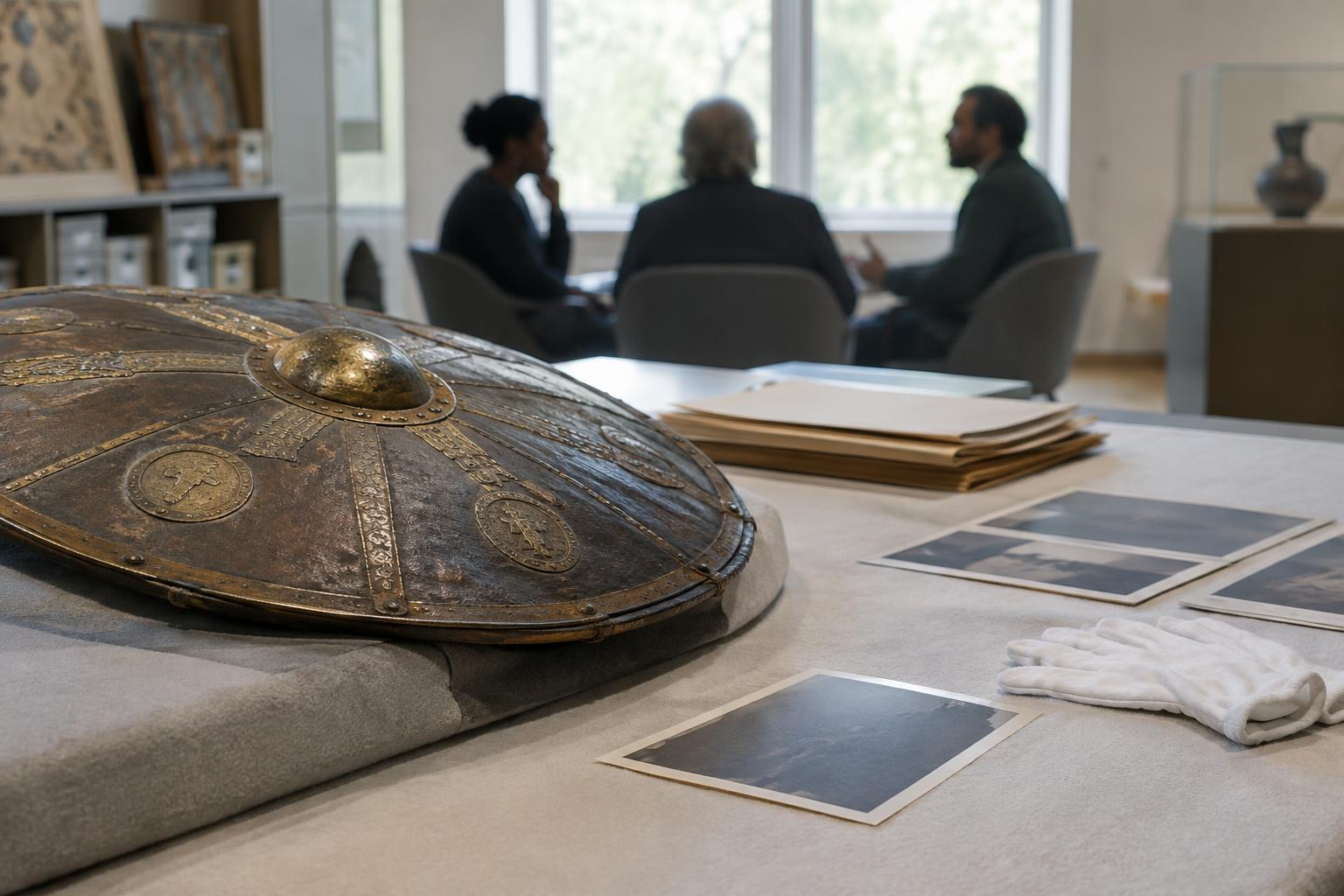
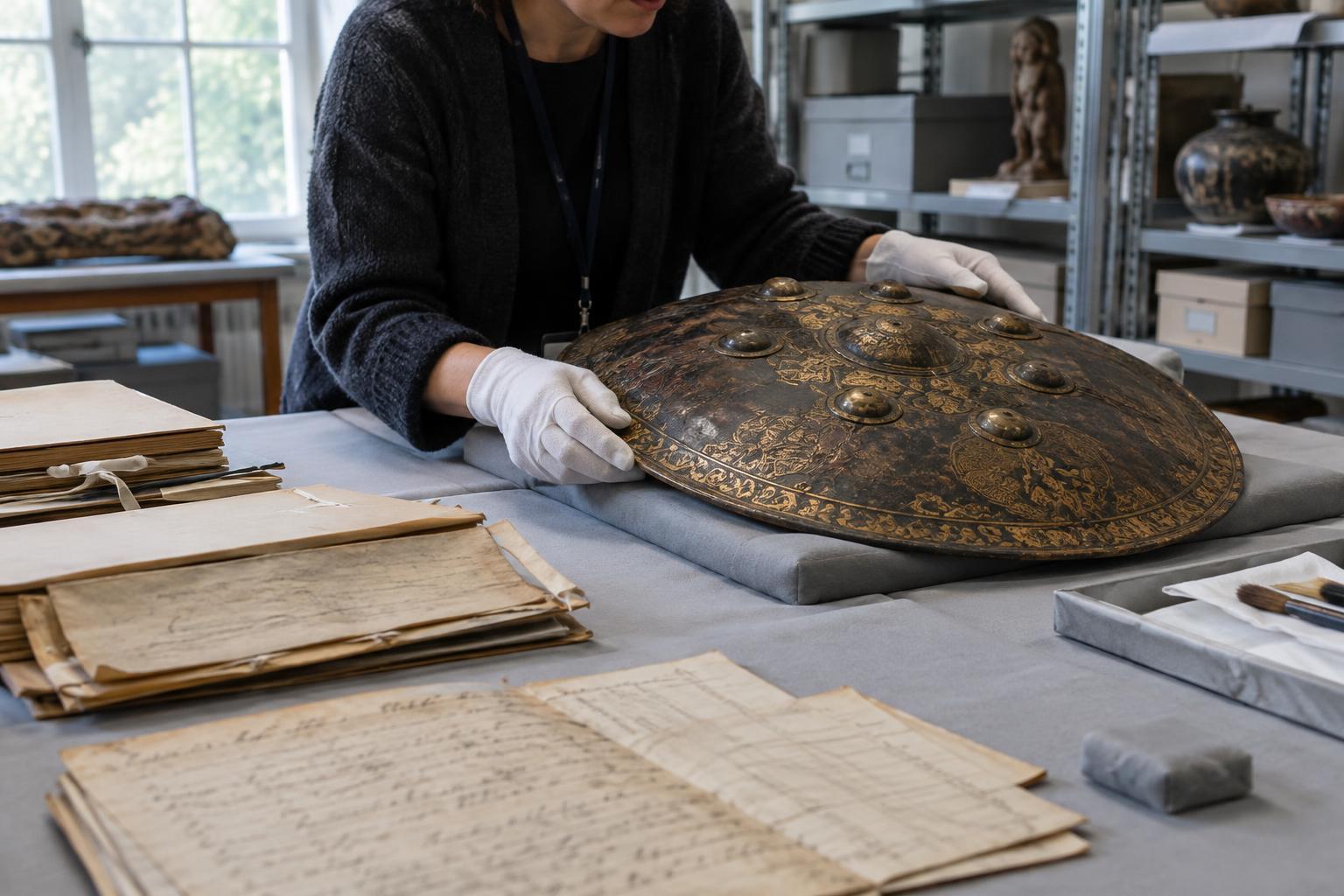
Not every object that fits the story can safely go on view. Condition, display supports, light exposure, environmental needs and security all affect the final selection. A fragile document might be represented through a reproduction, while a heavy object may require a mount that limits where it can stand. Such decisions are part of responsible exhibition-making, not merely obstacles to it.
These limits can encourage clearer choices. If one object cannot be displayed, another may express the same idea, or a label may explain the absent evidence. The strongest exhibitions do not rely on the largest possible number of objects. They choose a manageable group whose relationships visitors can examine—and whose care allows future visitors to encounter them too.